Key Takeaways
Buying used Chrysler interiors for sale can save money, but the right part must match your vehicle and its condition. Start with careful identification, then verify fitment, cost, and installation requirements before paying.
- Identify the exact interior component, trim, color, and finish you need.
- Confirm model year, generation, part numbers, and VIN compatibility.
- Compare salvage yards, online sellers, dealerships, forums, and private listings.
- Inspect cosmetic condition, mounting points, wiring, and return terms.
- Include shipping, cleaning, refurbishment, and professional installation in the budget.
Identify the Chrysler interior parts you need
A Chrysler interior is made up of many separate pieces, and a search for one broad item can quickly become confusing. Seats, trim, carpets, consoles, and electronic panels may be sold individually or as part of a larger assembly. Before contacting sellers, photograph your current interior and write down exactly what is damaged or missing. This simple inventory helps prevent buying a nearly suitable part that still leaves the original problem unresolved.
Seats, seat covers, and upholstery components
Seats are among the most visible and expensive interior replacements, but the seat frame, cushion, cover, headrest, and adjustment mechanism may all be separate components. Check whether you need a complete seat or only an upholstery section, and compare the stitching, fabric, leather, bolsters, and side-airbag cut-outs. A donor seat can look right while using a different wiring connector or mounting arrangement, so inspect more than its surface.
If you are replacing a single seat, compare wear on the driver and passenger sides before choosing. Matching material and color matters, yet a clean seat with the wrong electrical equipment may create more work than a worn but compatible one. Ask for photographs of the underside and the seat rails, not just the front cushion.
Door panels, armrests, and trim pieces
Door panels often suffer from broken clips, loose fabric, sun fading, and damaged armrests. Remove your existing panel carefully enough to see how it attaches, then note the location of speakers, window switches, handles, and courtesy lights. A panel from another trim level may physically attach but leave openings or fittings that do not match your car.
Small trim pieces deserve the same care as large panels. Compare the texture, gloss, grain, and color in daylight, since interior plastics can appear similar in a seller’s photograph while looking noticeably different in person. Exact visual matching matters when you are replacing only one section of a otherwise intact cabin.
Dashboards, consoles, and instrument panels
Dashboard and center-console parts can combine structural plastic, soft-touch surfaces, storage sections, switches, and electronic equipment. Decide whether you need the complete assembly or a removable fascia, lid, bezel, or vent. The distinction affects both price and installation time, particularly when the replacement contains wiring or integrated controls.
Instrument panels should be matched by more than appearance. Check the connector layout, warning-light arrangement, odometer considerations, and any included modules with a qualified seller or technician. Never assume that a similar-looking panel will communicate correctly with the vehicle simply because it came from the same Chrysler model family.
Carpets, floor mats, and headliners
Carpets and headliners are often overlooked until water damage, stains, or sagging fabric makes the cabin unpleasant. A carpet may be molded for a particular body style and include cut-outs for consoles, seat mounts, and wiring channels. Headliners also vary with sunroofs, overhead consoles, lighting, and grab-handle locations.
Measure storage space before ordering a bulky carpet or headliner. Ask whether the carpet has been removed in one piece and whether the seller can show its underside, edges, and molded contours. Floor mats are simpler, but their retention clips and shape still need to match the vehicle’s floor.
Match used interior parts to your Chrysler
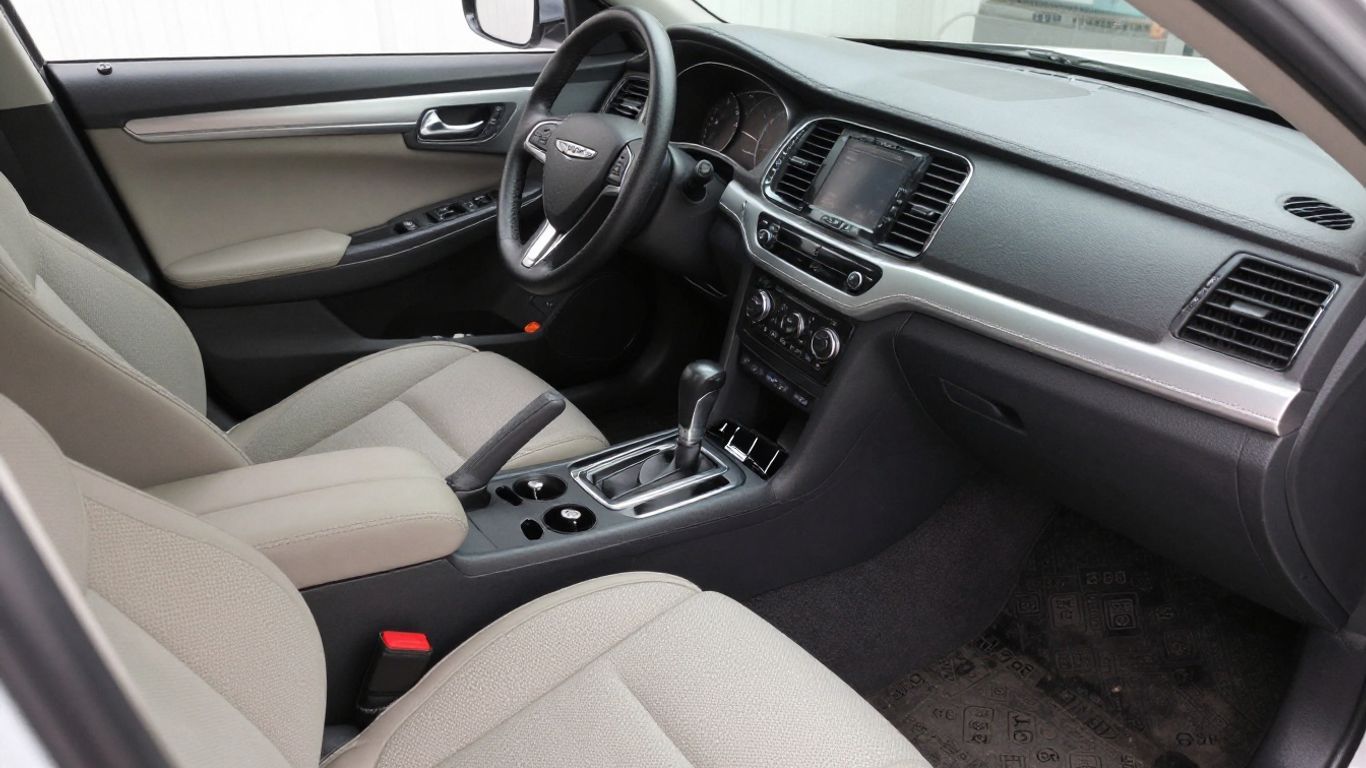
Fitment is the point where a promising listing either becomes useful or falls apart. Chrysler vehicles can share names across multiple years while changing dashboards, connectors, seat mounts, colors, and trim details. Use the vehicle identification number, production information, and clear photographs together rather than relying on a title that says only “Chrysler interior.” The more precisely you define the vehicle, the less likely you are to pay twice for a correction.
Confirm the model year and generation
Begin with the model, model year, body style, and generation. A sedan, wagon, minivan, or SUV with a similar name may use a completely different cabin layout, while a mid-generation update can change consoles and instrument panels. Record whether the vehicle is left-hand drive, and note any special body or seating configuration.
Production timing can matter when a model changed during the same calendar year. If the seller provides a donor vehicle identification number or build information, keep it with the listing details. This gives you a stronger comparison than a broad year range and can reveal whether the part came from the correct revision.
Compare trim levels and interior colors
Trim level affects materials, stitching, seat controls, decorative inserts, speaker openings, and storage features. Compare the donor part with your interior in natural light, since photographs taken with a flash can make charcoal, black, beige, and gray appear interchangeable. Color names also vary between listings, so visual evidence is essential.
Look for texture as well as shade. Two panels can share a color family but use different grain patterns or surface finishes. If the replacement will sit beside an older component, ask whether the seller can provide a close photograph of both the visible face and the edge where the pieces meet.
Check part numbers and factory compatibility
Part numbers are useful when they are legible and tied to the correct assembly, but they should not be treated as the only proof of fitment. A superseded number may be compatible, while a visually similar number may belong to a different side, trim, or production revision. Compare the number with a reliable parts reference and ask what vehicle the donor part came from.
The best listing information connects the part number to the vehicle’s year, body style, trim, and connector arrangement. If those details conflict, pause before buying. A low price does not compensate for a part that requires fabrication, altered wiring, or a second shipment.
Use VIN and vehicle photos for verification
Send the seller your VIN when appropriate, along with photographs of the current part, mounting points, connectors, and surrounding trim. Images are especially helpful for unusual colors, damaged labels, and assemblies that have several versions. Cover personal information in photographs and share only what the seller needs for fitment.
A useful verification request asks the seller to confirm the donor vehicle, visible part number, side of the vehicle, and included hardware. Keep the response with your order records. That small paper trail can clarify what was promised if the part arrives different from the listing.
Choose the best source for used Chrysler interiors
There is no single best place to buy every interior component. A salvage yard may offer a complete donor cabin, while a specialist seller may have better photographs and more precise cataloging. Local sources can reduce freight on large panels, but online listings may provide a much wider selection. Choose the source according to the part’s size, rarity, fragility, and need for fitment support.
Salvage yards and auto recyclers
Salvage yards and auto recyclers are useful when you need several matching pieces from one vehicle. You may be able to source seats, panels, carpets, and console parts from the same donor, which improves color consistency. Ask how the vehicle was stored, whether it experienced flood or fire damage, and whether the parts were removed before or after exposure to weather.
For large or delicate parts, ask about pickup options and packaging. Inspect the donor vehicle or request current photographs if possible. A recycler that records the donor details and labels removed components can make later fitment questions much easier.
Online marketplaces and specialty part sellers
Online marketplaces provide broad choice, but listing quality varies considerably. Read the full description, inspect every photograph, and look for details about the donor vehicle rather than relying on generic compatibility language. Specialty sellers may charge more while offering clearer part identification, tested features, or better packaging.
The seller’s communication style is a practical clue. A person who answers questions about connectors, color codes, mounting tabs, and included hardware is usually easier to work with than someone who supplies only a stock photograph. Save screenshots of the listing before checkout in case details change later.
Local dealerships and Chrysler forums
A local dealership may help confirm a part number, trim distinction, or factory variation even when the replacement itself will come from another source. Dealership pricing can also provide a useful reference point for new or discontinued components. Do not assume that an identification conversation means the dealership has a used part available.
Chrysler forums and owner communities can add valuable firsthand knowledge about interchangeability and common failure points. Treat forum advice as a lead to verify, not as a guarantee. Vehicle modifications, regional specifications, and production changes can make one owner’s successful swap unsuitable for another car.
Private sellers and part-out listings
Private part-out listings can be attractive when the seller is dismantling a vehicle with the interior still intact. Ask for the donor model year, trim, mileage if known, storage conditions, and photographs taken recently. Confirm whether the price includes brackets, switches, clips, rails, and other small pieces that are easy to lose during dismantling.
Arrange collection carefully for bulky parts and inspect them before handing over payment when possible. If shipping is required, agree on packaging and the condition that will be documented. A short written record of the item, price, and included pieces can prevent an avoidable misunderstanding.
Evaluate the condition before you buy
A used interior part is worth judging as both a cosmetic item and a working component. Surface damage may be repairable, while broken mounts, missing brackets, or failed electronics can make a cheap part uneconomical. Ask for direct photographs rather than relying on a seller’s label such as “good condition.” Condition descriptions are subjective, so specific evidence is more useful.
Look for cracks, stains, tears, and fading
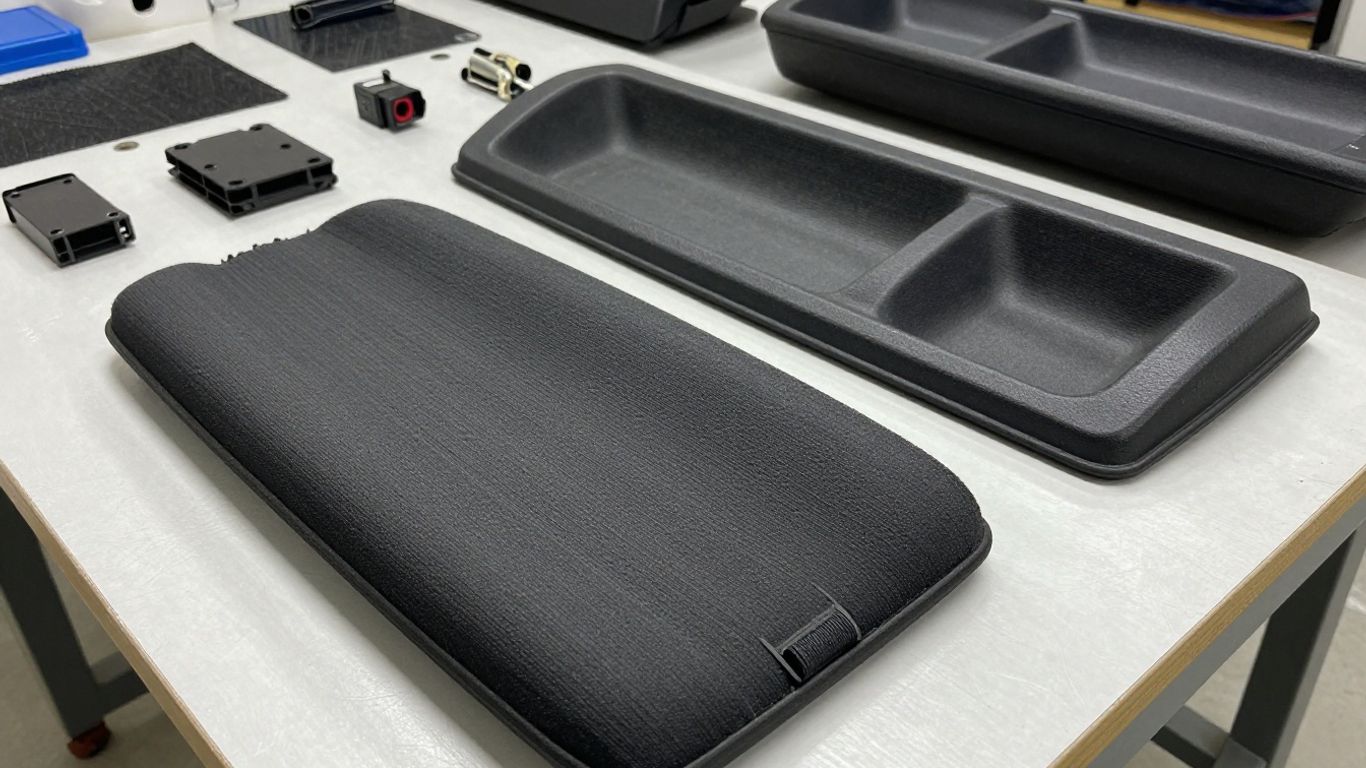
Inspect visible surfaces for cracks around screw holes, stains in seams, tears on seat bolsters, and fading near windows. Check the rear and underside too, because damage is often hidden where a listing photograph does not reach. Leather and vinyl may have drying, peeling, or repaired sections that only appear in close-up images.
Cosmetic defects are not automatically a reason to walk away. A small mark on a hidden trim edge may be acceptable, while a cracked dashboard near an airbag area may not be. Decide which flaws you can live with before comparing prices so that a bargain does not become an unwanted restoration project.
Inspect mounting points and hardware
Mounting points carry more importance than minor scratches. Look for snapped clips, bent brackets, stripped screw holes, missing rails, and broken tabs. Ask whether all fasteners and covers are included, especially when the component is sold after a vehicle has already been dismantled.
If you can compare the replacement with your original part, count mounting points and note their position. Photograph both pieces side by side. This makes it easier to identify a donor part that is close in shape but not actually interchangeable.
Check electronic features and wiring
Seats, consoles, panels, and instrument assemblies may include switches, motors, sensors, speakers, lights, or wiring. Ask whether each feature was tested, what connectors remain attached, and whether the part is being sold with its control module. A seller who cannot test a component should describe it as untested rather than implying that it works.
Never cut a connector from your vehicle just to make a used part fit. Compare connector shapes and pin locations first, then obtain professional advice when the circuit relates to restraint systems or vehicle communication. Electrical compatibility is a technical question, not a visual one.
Ask for detailed photos and return policies
Before paying, request photographs of labels, mounting points, seams, corners, connectors, and any damage mentioned in the description. Also ask how the part will be packaged and whether the seller accepts returns for incorrect fitment or undisclosed damage. Return conditions may exclude electrical items, special orders, or parts damaged during installation.
A short message can cover the essentials without slowing the purchase. Ask for the donor vehicle details, exact part included, condition of hidden areas, tested features, shipping method, and return window. Keep the answer with your order confirmation so the agreement remains clear.
A part is only a bargain when its condition, fitment, and total cost are understood before payment.
That principle is particularly useful for large interior assemblies. The cheapest listing may need cleaning, missing hardware, freight insurance, and professional work, while a slightly higher-priced part may arrive ready to install.
Compare prices and total replacement costs
Comparing sticker prices alone gives an incomplete picture of a replacement interior purchase. A seat or dashboard can carry substantial freight, and a low-cost panel may need clips, refinishing, or color correction. Build a simple estimate before choosing between listings. Include the cost of getting the part ready, not just the amount shown beside the item.
Estimate fair prices for common interior parts
Prices vary with rarity, size, trim level, condition, and whether the component includes electronics or hardware. Use several comparable listings rather than one unusually low or high example. Compare like with like: a complete powered seat should not be measured against a bare seat frame, and a clean molded carpet should not be compared with one carrying water damage.
The Australia-wide supplier described for this publication focuses on making part-finding fast and affordable across Melbourne, Sydney, Brisbane, and nationwide. That positioning is useful when requesting quotes, because availability and delivery distance can affect the real value of a used component. Still, confirm the exact item and condition before treating any quote as comparable.
Include shipping, taxes, and core charges
Freight can change the decision, especially for dashboards, headliners, seats, and carpets. Request a delivered price that identifies shipping, taxes, insurance, and any refundable core charge. Ask whether the shipment is curbside, whether packaging is included, and what happens if the part arrives damaged.
A core charge may apply when the seller expects an old component in return. Confirm the deadline, acceptable condition, and return freight before ordering. These details belong in the comparison because they affect cash flow and the final amount you actually spend.
Factor in cleaning and refurbishment
Used parts often need vacuuming, disinfecting, leather conditioning, plastic restoration, stain treatment, or minor clip replacement. Add those costs even if you plan to do the work yourself, since supplies and time still have value. Mold, smoke odor, and deep staining may require specialist treatment rather than ordinary interior cleaner.
Refurbishment can improve appearance, but it cannot reliably correct a warped panel, broken mount, or incompatible connector. Separate cosmetic work from structural or electrical repairs in your estimate. That distinction helps you reject a part whose attractive photograph hides expensive work.
Compare used, refurbished, and new alternatives
Used parts are often the most practical option for older vehicles, discontinued colors, and complete assemblies. Refurbished pieces may offer cleaner surfaces or repaired hardware, while new parts can make sense for safety-related items or components still readily available. The right choice depends on fitment, condition, warranty, availability, and total installed cost.
Ask what has actually been refurbished rather than accepting the label at face value. A cleaned part is not necessarily rebuilt, and a repainted panel may not retain its original texture. Compare the warranty and return protection along with the price, particularly for electronics and complex assemblies.
Install and maintain your replacement interior
Good installation begins before the replacement reaches the vehicle. Clear a clean work area, label removed fasteners, and photograph wiring routes as you disassemble the original part. Read the vehicle service information for the relevant component, and do not force clips or connectors simply because the replacement looks close. Careful preparation protects both the new part and the surrounding interior.
Prepare the vehicle and replacement parts
Disconnecting the battery may be appropriate for some work, but the correct procedure depends on the vehicle and the system involved. Gather trim tools, protective covers, replacement clips, gloves, and containers for fasteners. Clean the replacement outside the vehicle where possible, allowing fabric, adhesive, and cleaning products to dry fully.
Test-fit large pieces before final tightening. Check door gaps, console alignment, seat travel, carpet contours, and access to switches. If a panel does not sit correctly, remove it and find the cause rather than tightening it until the plastic bends.
Decide which jobs require professional installation
Simple floor mats, some trim covers, and straightforward cosmetic panels may suit a careful home installer. Seats with powered adjustment, headliners, dashboards, and components requiring extensive disassembly demand more time and skill. A professional can also identify hidden damage before it becomes a rattle or electrical fault.
Consider professional help when the job involves restraint systems, complex wiring, windshield removal, or structural mounting points. The cheapest installation is not always the lowest-cost result if a cracked trim piece or damaged connector must later be replaced. Get a clear labor estimate before work begins.
Handle airbags, seat belts, and electrical systems safely
Airbags and seat-belt pretensioners require special care, correct isolation procedures, and appropriate technical knowledge. Do not probe restraint connectors, bypass warning circuits, or reuse damaged hardware. If an interior component is close to an airbag module or seat-belt assembly, follow the manufacturer’s service procedure or use a qualified technician.
The same caution applies to electronic panels, powered seats, heated elements, and vehicle-network connections. Incorrect wiring can create a fault that is harder to diagnose than the original damage. If a warning light appears after installation, stop and have the system assessed rather than repeatedly reconnecting parts.
Clean and protect the replacement components
Use a cleaner suited to the material: fabric, vinyl, leather, soft-touch plastic, and hard trim do not all respond to the same product. Test an inconspicuous area first, avoid soaking foam and wiring, and dry components thoroughly. Sun protection and gentle regular cleaning will help slow fading and surface deterioration.
Keep receipts, donor details, part numbers, and installation notes with the vehicle records. If a replacement begins to loosen or develop an electrical fault, those details make diagnosis easier. A well-maintained interior also preserves the value of the time and money invested in finding the right used part.
Conclusion
Finding used Chrysler interiors for sale is much easier when the search starts with exact identification rather than a broad request. Match the part to the vehicle, inspect its hidden condition, calculate the delivered and installed cost, and treat safety-related installation as professional work when needed. With that process, a used replacement can restore the cabin without turning a modest repair into an expensive series of guesses.