Key Takeaways
Finding same-day parts is easier when you begin with accurate vehicle and part information rather than a rushed guess.
- Record the Chrysler’s year, model, engine, and VIN before contacting suppliers.
- Confirm the exact part number, stock status, price, and delivery window.
- Compare genuine, aftermarket, and recycled options according to the repair.
- Inspect the part before installation and retain every receipt and warranty document.
- Include freight, fitting, diagnosis, and possible return costs in the budget.
Identify the Chrysler part you need
A fast repair starts with identifying the component precisely. Chrysler vehicles can share names across different years and variants while using different fittings or part numbers. Gather the basic vehicle details first, then verify the component with a supplier or qualified technician. This small amount of preparation can prevent a costly wrong order.
Use the vehicle’s year, model, and engine
Begin with the vehicle’s build year, exact model, body style, and engine size. If the vehicle has more than one engine or transmission option, record the relevant specification rather than relying on the model name alone. These details give a parts counter a useful starting point and help narrow a broad catalogue.
It also helps to describe the repair symptom and the location of the component. A faulty cooling-system part, for example, may be confused with another nearby item when the request is made using a vague name. Clear language makes a quick conversation more productive.
Check the VIN for an exact match
The VIN can distinguish vehicles that appear identical but were built with different equipment. Give the full VIN to the supplier and ask whether it can be used to verify the application. For urgent orders, this is usually safer than choosing a component from a generic online photograph.
Read the VIN back carefully before payment, especially when it is provided over the phone. One incorrect character can lead to a mismatch, so ask the supplier to repeat the vehicle details and the selected application in writing.
Compare OEM, aftermarket, and recycled parts
Genuine or OEM parts may be the straightforward choice when exact fit, original specification, or a sensitive electronic system matters most. Quality aftermarket parts can be suitable where a reputable manufacturer provides clear application details. Recycled components may make financial sense for older vehicles, trim, or hard-to-find items.
The cheapest option is not automatically the best urgent option. Consider condition, warranty, availability, and the consequences of returning the wrong part before choosing between new and recycled stock.
Confirm part numbers and compatibility
Ask for the complete part number, including any suffixes or revisions, and compare it with the number on the removed component where practical. A visual match is helpful, but it cannot replace confirmation of connectors, mounting points, and vehicle application. Exact part data saves time when the repair window is tight.
Before placing the order, ask whether the number is current, superseded, or interchangeable with another documented number. Keep that information with the quote so the installer can check it against the delivered component.
Find suppliers that offer same-day Chrysler parts
Same-day availability depends on more than a supplier appearing nearby in a search result. The part must be physically available, released before the cutoff, and able to reach your Melbourne delivery area or pickup point. A short call can clarify details that an online listing may not show. Treat the promised time as something to confirm, not assume.

Search local dealerships and auto parts stores
Start with local dealerships, independent parts stores, wreckers, and specialist suppliers that handle Chrysler applications. Ask for the part by its verified number and provide the VIN if requested. Local businesses may offer pickup, a regional courier, or advice about a compatible alternative.
Do not call only one source when the repair is urgent. Compare actual stock and collection times, while remembering that a listing marked “available” may mean stock exists elsewhere rather than at the Melbourne counter.
Check warehouse stock before ordering
Ask whether the item is on the premises, at a nearby branch, or in a central warehouse. Confirm that the stock is physically allocated to your order and not merely shown as available in a catalogue. For recycled parts, ask about the component’s condition and whether it has been inspected.
A written stock confirmation is particularly useful when several customers are seeking the same scarce component. It also gives you a reference if the supplier later discovers a counting error.
Ask about Melbourne delivery and pickup areas
Suppliers may divide Melbourne into delivery zones, and the service available in one suburb may differ from another. Give the full delivery address or the preferred pickup location before accepting a same-day promise. Ask whether the quoted time is a dispatch time, an estimated arrival, or a counter-collection time.
If a courier is involved, check whether someone must be present to receive the parcel. A missed delivery can turn an otherwise available part into a next-day repair.
Verify cutoff times and weekend availability
Ask for the order cutoff, dispatch schedule, weekend hours, and public-holiday arrangements. Same-day service may apply only to orders placed before a particular time and may not include every part category. Also confirm whether payment must clear before stock is reserved.
It is sensible to request the commitment by email or text. That record should state the part number, price, collection or delivery method, and expected timing so everyone is working from the same details.
Choose between genuine and aftermarket Chrysler parts
The right choice depends on the component, the vehicle’s condition, and the repair’s consequences. A safety-related or electronically sensitive part may deserve a different standard from a simple trim component. Price matters, but so do fit, traceability, warranty support, and the time needed to correct a failed installation.
When genuine OEM parts are the safest choice
Genuine OEM parts are often the least uncertain route when the component affects braking, steering, restraint systems, engine management, or a precise electronic connection. They may also be sensible when the vehicle is in particularly original condition or when an exact fit is difficult to verify elsewhere.
Ask what warranty applies and whether the item is current or superseded. A genuine label alone does not remove the need to check the VIN and part number.
Where quality aftermarket parts can save money
A reputable aftermarket component can reduce the purchase price while meeting the application requirements. Look for clear vehicle coverage, a recognised manufacturer, consistent packaging, and a warranty that can be used locally. Ask whether the part is a direct replacement or requires additional hardware.
Savings are most useful when the component is readily available and the repairer is comfortable fitting it. A lower purchase price can disappear if the part needs modification or causes a second visit.
How recycled parts fit older Chrysler models
Recycled parts can be practical for older Chrysler models, especially when new stock is scarce or discontinued. Their suitability depends on the donor vehicle, mileage, visible condition, and whether the supplier can confirm compatibility. Body panels, interior pieces, and some mechanical components may be assessed differently, so ask targeted questions.
Request photographs of the actual component rather than a catalogue image. For electrical or safety-related items, ask how the part was tested and whether the supplier provides a return period.
Assess warranties, certifications, and return policies
Read the warranty before paying, including exclusions for incorrect installation, wear, or diagnostic error. Check who handles a claim, whether freight is covered, and how quickly a replacement might be supplied. A return policy should also explain restocking charges and the condition required for acceptance.
These terms are part of the part’s real value. A slightly higher-priced item with clear support may be less expensive than an uncertain bargain that cannot be returned.
Order Chrysler parts for urgent repairs
An urgent order should leave as little room for interpretation as possible. Send the supplier the vehicle information, part description, verified number, and delivery requirements in one message. Then check the response before authorising payment. A concise written trail protects both speed and accuracy.
Provide complete vehicle and part details
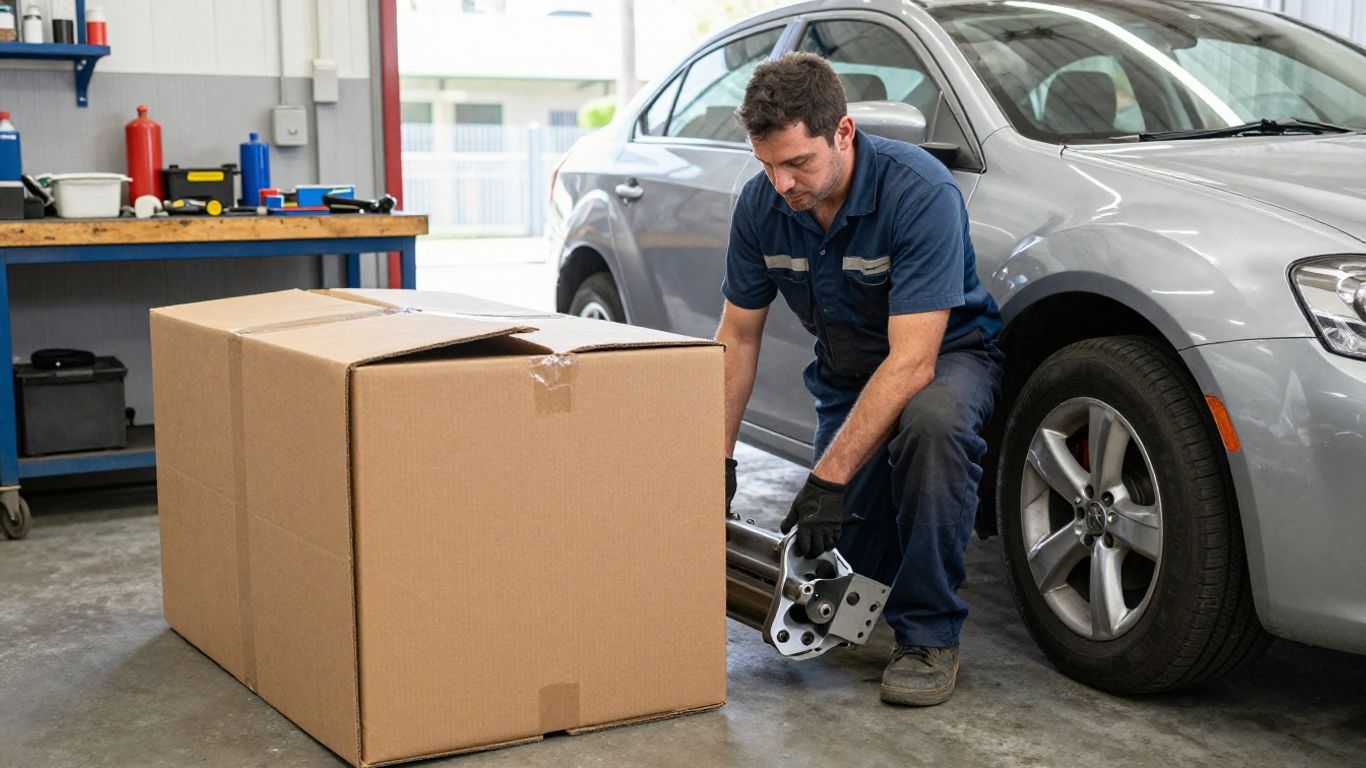
Include the VIN, year, model, engine, registration details if useful, part number, side or position, and the symptoms or repair diagnosis. Mention whether you need a new, aftermarket, genuine, or recycled item. If the component has already been removed, provide clear photographs of labels, connectors, and mounting points.
This information helps the supplier distinguish similar applications. It also reduces repeated calls while a vehicle is waiting in a workshop or driveway.
Confirm availability in writing
Ask the supplier to confirm the exact part number, condition, price, tax, stock location, and expected delivery or pickup time. Make sure “same day” refers to the time you need the part, not merely the time it will leave a warehouse. Save the confirmation with your payment record.
If any detail is uncertain, pause before paying. A few minutes spent resolving an ambiguity is usually preferable to arranging an urgent return later.
Compare delivery, pickup, and courier options
Pickup can be the quickest choice when the supplier has the component at a nearby counter. Delivery may be more convenient but can depend on traffic, route timing, and whether the address is within the service area. An express courier may shorten the window while adding a substantial fee.
Ask for the total landed cost and the latest realistic arrival time for each option. Choose the method that fits the repair schedule rather than automatically selecting the fastest-sounding service.
Prepare for backorders and discontinued components
Older vehicles may have components that are backordered, superseded, or discontinued. Ask whether an approved replacement number exists and whether a compatible recycled part is available. If the answer is uncertain, have the supplier explain what evidence supports the proposed alternative.
A fast part is only useful when it is the correct part and can be installed safely.
That principle is worth keeping in view when time pressure makes an unverified substitute seem attractive. If no reliable option is available today, a documented delay may be safer than a rushed mismatch.
Check the part before installation
The handover is not the end of the identification process. Inspect the component while the return period is still open and before old parts are discarded. The installer should compare the delivered item with the vehicle and the order, not simply trust the box. This is especially useful when several similar components are in circulation.
Match packaging and part numbers
Compare the label, barcode, part number, revision, and described application with the order confirmation. Look for damaged seals, missing hardware, or packaging that appears to have been opened. For a recycled component, confirm that the actual item matches the photographs or condition described by the supplier.
Do not remove protective films or alter the component until fit has been checked where the return policy requires it. Keep all packaging until the repair is complete.
Inspect the component for damage
Look for cracks, corrosion, bent brackets, fluid contamination, broken clips, worn threads, and signs of impact. Rotate or move accessible parts gently, but avoid testing anything in a way that could void the warranty. Photograph any concern before installation and contact the supplier promptly.
A clean inspection can reveal transport damage that would otherwise be blamed on the fitting process. It also gives you a clear record of the component’s condition on arrival.
Confirm connectors, dimensions, and mounting points
Compare electrical connectors, hose outlets, bolt spacing, bracket shape, and overall dimensions with the removed part. Do not force a connector or mounting hole into place. Small differences can indicate a different variant, even when the main housing looks identical.
If the comparison raises doubt, stop and recheck the VIN and part number with the supplier. Installing first and asking questions later can make a return much harder.
Keep receipts and warranty documents
Store the invoice, order confirmation, delivery record, warranty terms, and fitting documentation together. Note who installed the part and keep any diagnostic report that explains the repair. These records may be needed for a return, warranty claim, or future service.
A simple digital folder with photographs and messages is enough. Good records are particularly valuable when the part was sourced quickly from more than one supplier.
Control the cost of same-day Chrysler parts
Urgency can make a reasonable price look less important, but the total repair cost still deserves a quick check. Compare the part, freight, fitting, diagnosis, and possible return expenses as one figure. The least expensive component price may not produce the lowest completed repair bill. A calm comparison can often be done in a few phone calls.
Compare local prices with online suppliers
Use online listings as price references, then ask local suppliers what they can provide today. A local option may cost more at the counter but avoid waiting, interstate freight, or a difficult return. An online item may be cheaper while offering no useful advantage if it cannot arrive within the repair window.
Compare like with like: new against new, genuine against genuine, and recycled against recycled. Check whether the listed price includes the same hardware, warranty, and condition.
Factor in shipping and express delivery fees
Ask for the complete delivered price before approving an urgent order. Include standard freight, express surcharges, rural or outer-area fees, collection costs, and any payment charges. If the part is coming from another warehouse, ask whether the quoted freight covers the full journey.
A supplier who states these costs clearly makes the decision easier. If the delivery fee changes the economics, local pickup or a suitable in-stock alternative may be worth considering.
Estimate installation and diagnostic costs
Confirm the fitting labour, diagnostic time, fluids, seals, programming, and disposal charges that may accompany the part. Some components are straightforward replacements, while others require testing or calibration after installation. Ask the repairer for a range if the final labour time depends on what is found.
This estimate helps separate a genuinely affordable option from one that only looks cheap before the vehicle reaches the workshop. It also prevents an urgent parts purchase from becoming an unexpected repair bill.
Avoid low-quality parts that create repeat repairs
A poor-quality component can lead to another order, more labour, and additional vehicle downtime. Check the manufacturer, application data, warranty, and supplier reputation before accepting an unusually low price. If the part’s origin or fit cannot be explained, the saving may not justify the risk.
The sensible target is dependable value, not simply the smallest number on a quote. Paying for a verified part once is often easier than repeating the same urgent search a week later.
Conclusion
The quickest route to same-day Chrysler parts Melbourne is careful preparation: verify the vehicle and part, confirm real stock and timing, compare the full cost, and inspect the component before installation. Those steps make urgent sourcing more predictable and reduce the chance that speed will come at the expense of fit, safety, or a second repair.