Key Takeaways
A recycled Chrysler grille can restore a vehicle’s original appearance without the cost of a new part. Careful fitment checks, condition checks, and a realistic view of total cost make the buying process much less risky.
- Match the grille to the vehicle’s year, model, trim, VIN, and part number.
- Inspect tabs, mounting points, finish, emblem fittings, and signs of warping.
- Compare the full cost, including shipping, repairs, and possible return fees.
- Ask clear questions about condition, availability, warranty coverage, and fitment.
- Install the grille patiently, then clean and protect it with suitable products.
Why recycled Chrysler grilles are worth considering
A damaged grille can make an otherwise sound Chrysler look unfinished, but replacing it does not always require buying new. Recycled Chrysler grilles may offer a practical balance between appearance, fit, and cost when the part has been properly inspected. The right choice depends on more than the asking price. It also depends on how closely the part matches the vehicle and how much work it needs before installation.
Lower costs compared with new replacement grilles
Used grilles are often priced below new replacement parts because they have already been removed from a vehicle. That difference can be useful when the damage is limited to the grille and the surrounding bumper, lamps, and support structure remain sound. Still, a low purchase price is only the starting point; shipping, missing hardware, cleaning, or minor repairs can change the final figure.
A sensible comparison weighs the complete cost rather than focusing on the listing price alone. A grille with a slightly higher price may be the better value if it arrives clean, includes its fittings, and needs no cosmetic correction.
Original-equipment fit and factory styling
A recycled grille removed from a matching vehicle may retain the original shape, mounting design, and surface treatment intended for that Chrysler. This can help preserve the vehicle’s factory appearance, particularly when aftermarket versions differ subtly in contour, finish, or badge placement. It is not a guarantee of perfect condition, so the exact vehicle details still need to be checked.
Look closely at the grille’s edges and attachment points. A part that appears correct from the front may still have a different rear structure or a missing bracket that prevents a clean installation.
Environmental benefits of reusing auto parts
Reusing a serviceable grille keeps an existing component in circulation instead of sending it directly into the waste stream. It can also reduce the need to manufacture, package, and transport a new replacement part. Those benefits are strongest when the recycled grille is genuinely usable and does not require extensive restoration.
The environmental case should not replace a fitment check. A grille that cannot be installed securely, or one that needs more material and labor to repair than it is worth, is not a practical reuse choice.
When recycled parts are a better choice than aftermarket options
A recycled part can make sense when preserving the original look matters, when the vehicle has an unusual trim configuration, or when a matching new part is difficult to source. It may also be preferable when the existing grille’s design includes details that are not reproduced consistently in lower-cost replacements. Fitment comes before savings because even an inexpensive grille becomes costly if it needs extensive modification.
Compare the used part with available alternatives by checking mounting points, finish, included hardware, and return terms. The best option is the one that reaches a secure, presentable result with the least additional work.
How to identify the correct Chrysler grille
Correct identification is the foundation of a successful purchase. Chrysler grille designs can vary across model years, body styles, trim levels, and facelift periods, even when vehicles look broadly similar. Gather the vehicle details before searching, then verify the listing against more than one source of information.
Matching the vehicle’s year, make, and model
Start with the exact model year, model name, and body style. A grille for one year may have different tabs, dimensions, or headlamp transitions from a grille for a neighboring year. If the vehicle has been modified, check whether the current front end is original before using it as the only reference.
Photographs of the whole front end can help establish the general design, but they should support—not replace—the vehicle identification. Record the details from the registration or vehicle documents before contacting a seller.
Checking trim levels and grille design differences
Trim levels can affect the grille’s pattern, surround, finish, emblem position, and connection to nearby pieces. Special editions may also use a distinctive insert or a different brightwork treatment. Two grilles may look nearly identical in a small online image while differing at the corners or along the upper mounting rail.
Ask for photographs taken straight on and from the rear. The rear view often reveals the clip arrangement and bracket design more clearly than a front-facing photograph.
Using the VIN and original part number
The VIN gives a seller or parts specialist a stronger starting point than a general model description. If the original grille is still available, look for a stamped, molded, or label-based part number and compare it with the replacement listing. Numbers should be treated carefully because supersessions and interchangeable applications may affect how a part is catalogued.
Provide the complete VIN when requesting a fitment check, while also describing the vehicle’s trim and any front-end changes. A matching number is useful evidence, but it should still be supported by physical and photographic comparisons.
Comparing photos, measurements, and mounting points
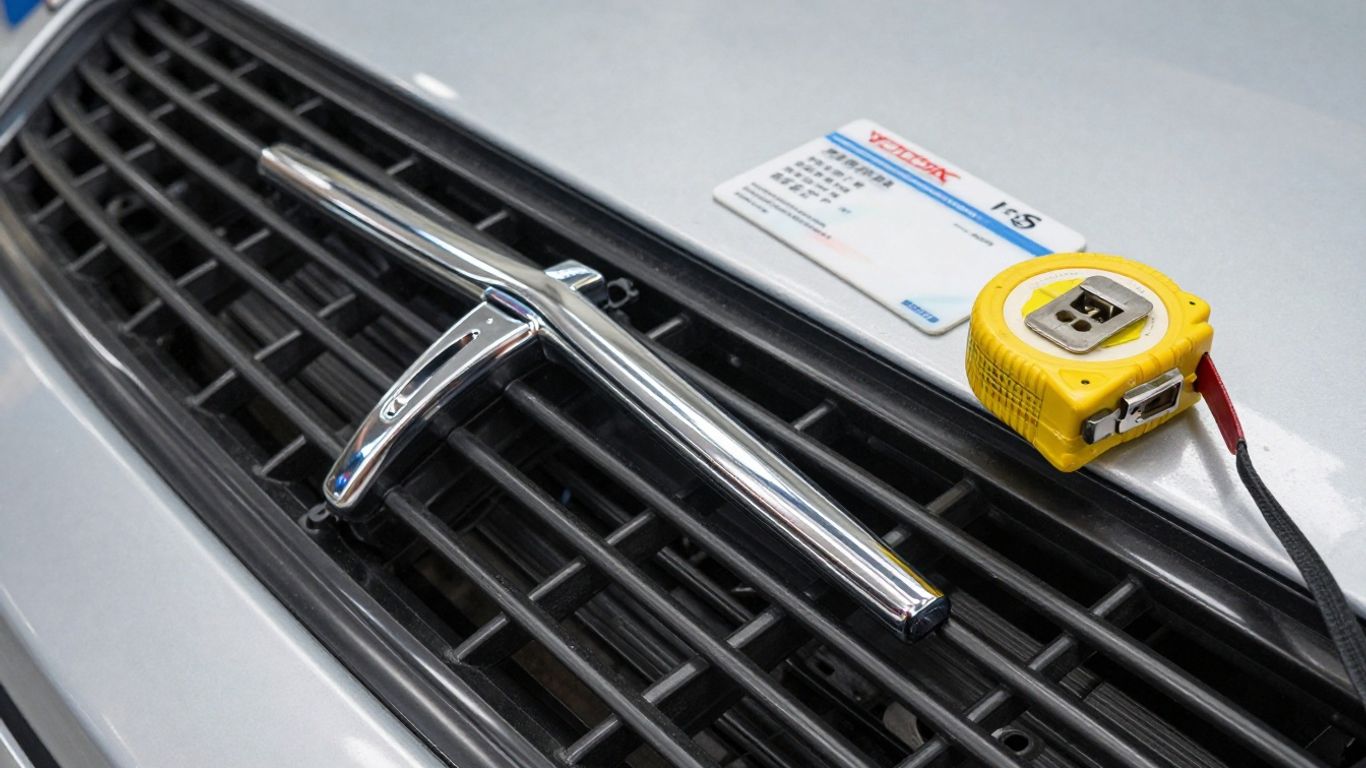
Measure the grille’s overall width and height where practical, then compare its corners, openings, clips, screw holes, and rear supports with the damaged part. Do not rely only on dimensions: a grille can share similar measurements and still fail to attach correctly. Photos should show the full face, rear surface, corners, emblem area, and every major mounting point.
Use a simple comparison record so differences are easy to spot before payment. If a seller cannot provide clear images of the areas that determine fit, treat that uncertainty as part of the buying decision.
What to inspect before buying a recycled grille
A listing can make a grille look better than it is, especially when photographs are small or taken from only one angle. Inspection should cover structural condition as well as appearance. Ask for additional images when necessary, and do not assume that a complete-looking front view means every clip and bracket is intact.
Checking for cracks, broken tabs, and warping
Examine the perimeter, corners, mounting ears, retaining tabs, and rear framework for cracks or breaks. Plastic can split around fasteners, while heat or impact can warp the grille enough to create uneven gaps after installation. A repaired tab is not automatically a reason to reject a part, but the repair should be described and visible.
Run through the likely attachment points one by one. Missing tabs may be difficult to replace, and a bent grille can place stress on the bumper or surrounding trim.
Evaluating chrome, paint, and finish quality
Brightwork should be checked for peeling, bubbling, corrosion, deep scratches, and areas where the underlying material is visible. Painted surrounds need a close look for fading, mismatched color, overspray, and scuffs. Minor marks may be acceptable on an older vehicle, while a heavily damaged finish can make a supposedly economical purchase expensive to restore.
Request photographs in natural light where possible. Reflections can hide pitting and scratches, so an angled view is often more informative than a polished front-on image.
Inspecting emblem mounts and hardware
The emblem area deserves separate attention because the grille may be usable while its badge mounts are damaged or incomplete. Check whether the emblem is included, whether its clips or studs remain, and whether the surrounding mounting surface is cracked. Also ask about screws, retainers, brackets, and clips that are specific to the grille.
Missing small hardware may be easy to source, but it should still be included in the cost calculation. A seller’s clear description of what is and is not included can prevent an unwelcome surprise.
Confirming the grille is ready for installation
Before buying, ask whether the grille has been cleaned, whether broken fittings have been repaired, and whether any components shown in the photographs are excluded. Confirm that the part is not being sold strictly for repair or as a core. If the grille needs repainting or refinishing, decide whether that work fits your budget and schedule.
A written condition description is helpful if the part is shipped. Keep the listing, photographs, and messages until the grille has been received and test-fitted.
Where to find reliable recycled Chrysler grilles
The source of a used grille affects the quality of the information you receive. Salvage inventories, online marketplaces, and established dismantlers each have different strengths. The most useful sellers can identify the donor vehicle, describe visible damage, and explain how fitment or returns are handled.
Auto recycling yards and salvage inventories
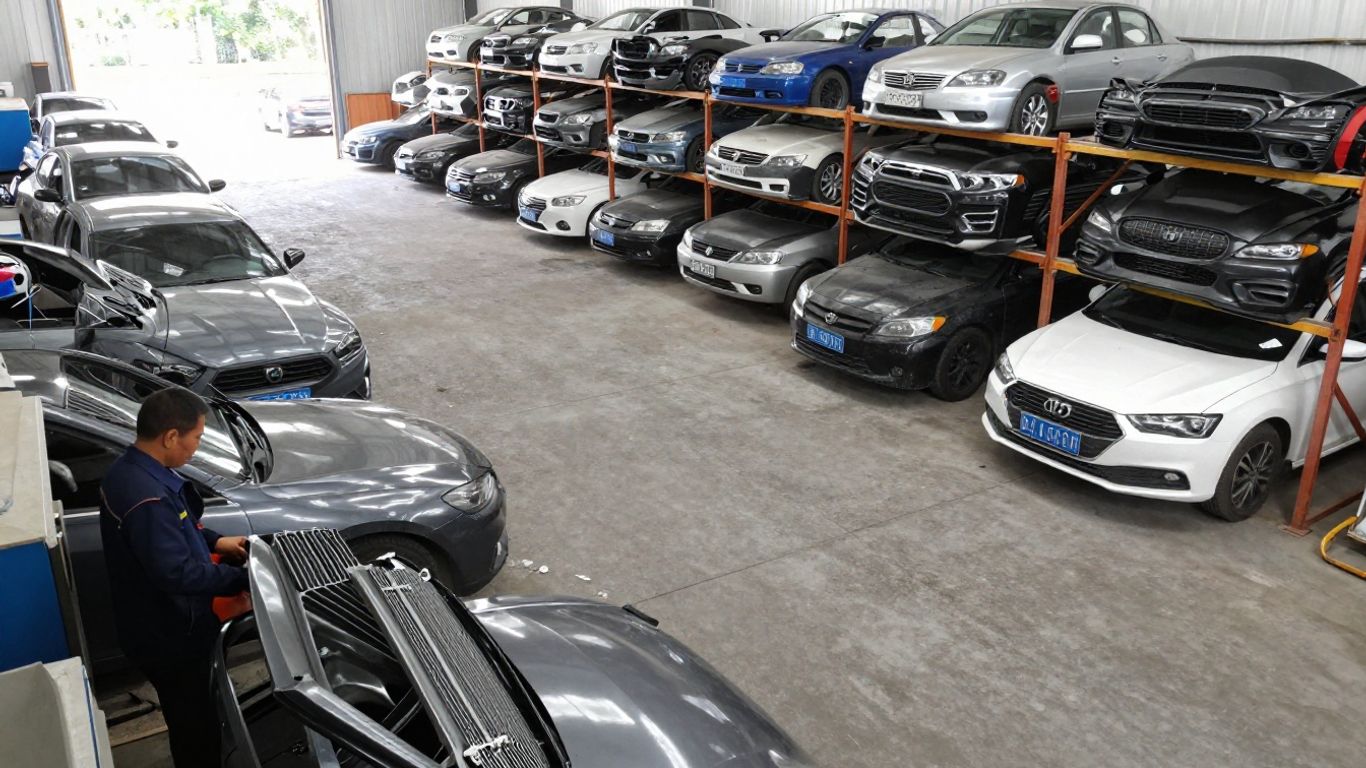
Local auto recycling yards may let you inspect a grille in person or compare it with the damaged original. This is particularly useful when color, finish, and mounting details are difficult to judge online. A yard may also have related brackets or fasteners from the same donor vehicle.
Call before travelling because inventory changes quickly. Give the yard the model year, model, trim, VIN if available, and the exact grille features you need.
Online used-parts marketplaces
Online listings make it easier to search multiple inventories and compare photographs, prices, and delivery options. Their weakness is that the part may look different when viewed closely, and the listing may not show the rear mounting structure. Read descriptions carefully and request missing images before committing to a purchase.
Save the listing details and verify the seller’s stated application against your vehicle information. A marketplace search is a useful starting point, not a substitute for fitment confirmation.
Reputable automotive recyclers and dismantlers
Established recyclers generally have clearer processes for cataloguing, inspecting, and dispatching used components. They may be able to identify the donor vehicle and provide a condition grade or warranty terms. That information is valuable when the grille is a less common design or when shipping makes an in-person inspection impossible.
Do not assume that every part from a professional inventory is flawless. Ask what was checked, what is included, and whether the photographs show the actual grille rather than a representative example.
Questions to ask about availability and condition
A short, specific conversation can reveal more than a generic “Is it in good condition?” Ask whether the exact part is in stock, whether the photographs are of that part, and whether the tabs, emblem mounts, brackets, and hardware are intact. Also ask about the donor vehicle, known damage, preparation, dispatch time, and return process.
A reliable used-part purchase begins with specific questions and ends with documented answers.
The answers should be clear enough for you to compare one listing with another. If a seller avoids basic condition questions or cannot confirm what is being supplied, the uncertainty deserves a lower value—or a decision not to proceed.
How to compare price, shipping, and warranty terms
The cheapest listed grille is not necessarily the cheapest complete repair. Shipping can be substantial because grilles are large, light, and vulnerable to impact, while a return can involve additional packing and freight costs. Compare the financial terms alongside the physical condition and fitment confidence.
Understanding the total cost of a recycled grille
Add the grille price, shipping, taxes or fees, cleaning supplies, replacement clips, and any expected refinishing or repair work. If an emblem or surround is not included, price those items separately. This calculation gives you a more useful figure than the headline listing price.
The following comparison is a practical way to organize the numbers before choosing between listings:
| Cost item | What to check | Why it matters |
|---|---|---|
| Part price | Listed price and included components | Establishes the starting cost |
| Freight | Shipping charge and delivery area | Large parts can carry higher freight costs |
| Preparation | Cleaning, polishing, or repainting | Affects the part’s finished appearance |
| Hardware | Clips, brackets, screws, and emblem fittings | Missing pieces can delay installation |
| Return exposure | Restocking, return freight, or exclusions | Protects the budget if fitment fails |
After filling in these figures, compare the likely installed cost rather than the advertised price. A slightly more expensive grille may be preferable if it includes the needed hardware and has stronger return protection.
Weighing local pickup against shipped parts
Local pickup can reduce freight and lets you inspect the grille before taking it home. It may also make it easier to find matching fasteners from the same donor vehicle. The trade-off is travel time, limited local inventory, and the need to transport the part without scratching or bending it.
Shipping is convenient when the correct grille is far away, but packaging quality matters. Ask how the grille will be protected at corners and across its finished face, and photograph the packaging before opening it if damage is suspected.
Reviewing return policies and fitment guarantees
Read the return period, exclusions, restocking charges, and responsibility for return shipping before payment. Some policies require the part to remain uninstalled, while others may exclude electrical or cosmetic components. A fitment guarantee is useful only when the seller defines what qualifies as a fitment issue and what vehicle information must be supplied.
Keep all confirmation emails and condition notes. If a mismatch appears, contact the seller promptly and avoid modifying the grille until the return options are clear.
Recognizing when a cheaper grille may need repairs
A low-priced grille may be worthwhile when the damage is cosmetic and repairable, but structural problems deserve more caution. Cracked mounting points, severe warping, widespread finish loss, or missing emblem supports can require specialized work. Estimate that work honestly rather than assuming it will be quick or inexpensive.
If the repair estimate approaches the cost of a cleaner, correctly matched grille, the cheaper listing has lost its advantage. Condition, completeness, and certainty should guide the final decision.
How to install and maintain a recycled Chrysler grille
Installation is usually easier when the replacement has been identified and inspected before the old grille is removed. Work on a clean, stable surface and protect painted panels around the front end. The exact fasteners and removal sequence vary by Chrysler model, so use the vehicle’s service information when available.
Preparing the replacement grille and mounting area
Clean the replacement grille gently and compare it with the original before fitting anything. Lay out the clips, screws, brackets, emblem, and other hardware, then inspect the bumper and support area for hidden damage. A bent mounting surface can make a good grille appear incorrect.
Test the grille in position without forcing it. This early check can reveal a wrong application or a damaged tab while access remains easy.
Removing the damaged grille safely
Use suitable trim tools and protect the surrounding paint with masking tape or a soft cloth. Remove accessible fasteners methodically, keeping different screw types separate so they return to their original locations. Do not pull hard against a clip that has not been released; sudden force can damage the bumper cover or adjacent trim.
If the grille is cracked or sharp, wear gloves and support it as the last attachments are released. Take photographs during removal if the arrangement is complicated.
Aligning fasteners, clips, and surrounding panels
Position the grille loosely first, then align the upper edge, corners, lower supports, and surrounding panels before tightening anything. The gaps should look even, and the grille should sit without pressure or twisting. Start fasteners by hand to avoid cross-threading and tighten them gradually rather than securing one side completely at once.
If a clip does not line up, stop and investigate. Forcing it may hide a bent bracket or cause a new crack that was not present when the part arrived.
Cleaning and protecting the grille after installation
Once the grille is secure, clean it with a product suitable for its material and finish. Avoid harsh abrasives on chrome-like surfaces and use soft cloths that will not introduce fine scratches. Check the fasteners again after the first short drive, especially if the grille was installed with replacement clips.
Regular washing removes road film before it can dull the finish. Address chips, peeling, or corrosion early, and avoid pressure-washing directly into loose edges or vulnerable emblem mounts.
Conclusion
A good recycled Chrysler grille is more than a low-cost cosmetic fix: it is a part that matches the vehicle, arrives in usable condition, and can be installed without unnecessary correction. Verify the details, inspect the structure and finish, compare the complete cost, and choose a seller that answers practical questions clearly. With that approach, a used grille can restore a clean factory-style appearance while keeping the repair manageable.