Key Takeaways
Express shipping can shorten a repair delay, but speed only helps when the replacement is correct and suitable for the vehicle.
- Verify compatibility with the VIN, OEM part number, and complete vehicle specifications.
- Compare shipping speed, delivery coverage, fees, taxes, and installation costs together.
- Ask how a used part was tested, stored, and documented before buying it.
- Inspect the shipment immediately and keep packaging until the part is confirmed.
- Read warranty, return, restocking, and core-charge terms before placing the order.
Understanding the market for Chrysler used parts
Used Chrysler components can be a sensible option when a new replacement is expensive, discontinued, or difficult to locate. The strongest candidates are usually original-equipment parts removed from a compatible vehicle and checked before resale. A lower purchase price does not remove the need for careful identification, though; a part that looks right can still have a different connector, mounting point, or calibration. Start by deciding whether the repair calls for a used component, a rebuilt unit, or a new part.
Why used OEM parts can be a practical alternative
A used OEM part was designed for the vehicle family in which it was originally installed, so it may offer a closer fit than a generic replacement. It can also preserve factory-style connectors, brackets, and finishes, which may reduce adaptation work during installation. Chuck and Eddies describes its used Chrysler inventory as including major and minor components, with inventory inspected at least twice. That kind of inspection history is useful, but buyers should still ask what checks were performed on the specific item.
Price is another reason to consider used parts, especially for an older vehicle whose market value does not justify a costly new assembly. Savings are most meaningful when the part arrives ready to install and does not require extra sensors, brackets, or programming. Fitment matters more than savings if returning a bulky or electronic component will be difficult.
Which Chrysler models and systems are commonly supported
Availability depends on the dismantler’s current inventory rather than on a permanent catalog. Common searches may include engines, transmissions, alternators, wheels, body panels, lighting, suspension pieces, and interior equipment, but the exact stock changes as vehicles are acquired and dismantled. Search by model and year first, then narrow the request to the system and side of the vehicle.
A seller may have several versions of a familiar model, yet those vehicles can differ in engine, drivetrain, body style, and equipment. Treat a broad model match as a starting point, not proof of compatibility. Ask for the donor vehicle details and the identifying number on the part whenever the component has one.
How vehicle age and trim affect part availability
Older Chrysler models can have fewer clean, matching parts because fewer donor vehicles remain and some items have already been sold. At the same time, older vehicles may share components across nearby years, while a newer trim may use a unique camera, module, seat, or lighting assembly. Trim names alone are not precise enough for many orders.
Availability also varies by color and condition. A mechanically sound door or hood may still need painting, while a trim-specific interior piece may be hard to replace with an otherwise similar item. Confirm whether the seller is supplying the exact finish, side, connector, and included hardware or only the core assembly.
When refurbished, aftermarket, or new parts may be better choices
Used is not automatically the best choice for every repair. A refurbished component may make more sense when internal wear is expected and the rebuilding process is documented. New parts can be preferable for safety-critical items, seals, wear surfaces, or components where failure would require removing the same labor-intensive assembly twice.
Aftermarket options may also be reasonable when a reputable manufacturer offers the required specification and a clear warranty. Compare the total cost, not just the sticker price: a cheaper used part with uncertain testing may cost more after shipping, installation, and a second repair. The right choice is the one that fits the vehicle and the repair risk.
Finding a reliable source for express shipping
A source for express shipping Chrysler used parts should be judged on more than a fast badge or attractive delivery promise. The seller needs accurate inventory, a practical fulfillment process, and clear rules for orders that cross state lines. Delivery estimates can change when a part has to be pulled, cleaned, inspected, or transferred from another location. Before paying, confirm that the quoted date applies to the exact part you are buying.
Evaluating inventory accuracy and fulfillment capabilities
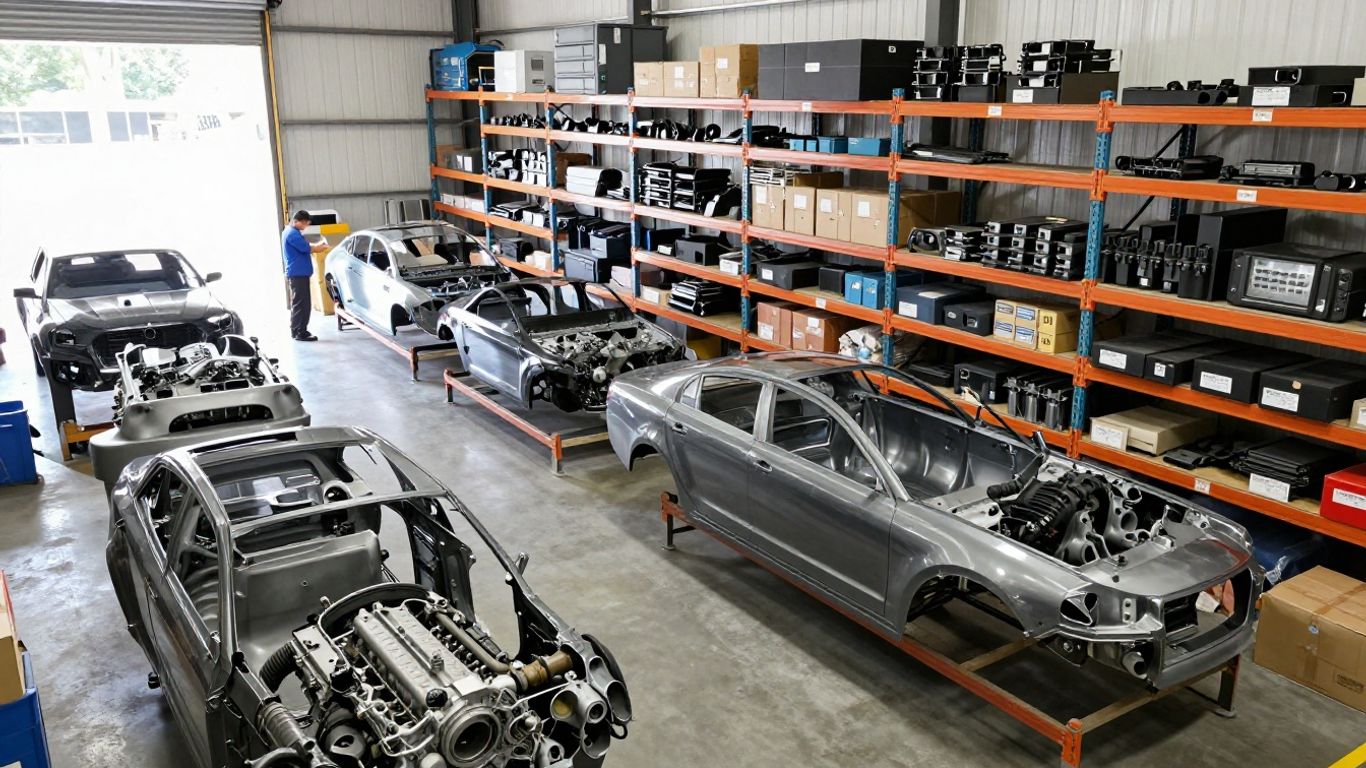
An accurate listing should identify the part, donor vehicle, condition, and any limitations rather than relying on a generic photograph. Ask whether the item is physically in stock, already removed, and ready to dispatch. If the seller must locate or pull it after checkout, the shipping clock may not begin when you expect.
Chuck and Eddies says that if a requested part is not in stock, its staff can find it and arrange delivery to the customer’s chosen location. That can be useful for hard-to-find components, but it is still wise to request a realistic handling estimate before selecting expedited service. A faster carrier cannot compensate for a part that has not yet been prepared.
Checking shipping zones, cutoff times, and delivery estimates
Express service usually depends on the order time, business days, destination, package size, and carrier pickup schedule. Ask whether the quoted estimate includes handling or only transit, and check whether rural, residential, or remote destinations receive the same service level. Large body panels and powertrain components may follow different rules from small boxed parts.
Get the cutoff time in writing when the repair is urgent. A purchase placed after the daily cutoff may ship on the following business day, turning an apparent overnight delivery into a two-day wait. It is also sensible to confirm whether weekends and holidays count toward the estimate.
Comparing nationwide delivery options and carrier services
A nationwide delivery claim still needs practical detail. Compare the service available to your ZIP code, the package dimensions, tracking quality, signature requirements, and the procedure for freight or oversized shipments. A ground service with dependable tracking may be more useful than an expensive speed tier that excludes the destination or has limited claims support.
When requesting a quote, provide the complete delivery address and ask for the service level, expected dispatch date, and expected arrival date. Keep those details with the order confirmation. If the part is time-sensitive, ask whether a local pickup or a different warehouse origin changes the estimate.
Reviewing seller ratings, warranties, and customer support
Ratings can reveal patterns involving packaging, fitment accuracy, communication, and refunds, but read recent comments rather than relying on a single score. A warranty should identify the covered part, duration, exclusions, labor policy, and proof required for a claim. Customer support matters most when the component arrives damaged or turns out to be incompatible.
A seller that can answer specific questions before purchase is easier to work with after delivery. Chuck and Eddies states that its used auto parts are backed by a Six Month Parts Protection Warranty and that eligible customers can receive a replacement or a refund of the purchase price plus shipping fees when a part does not meet their needs. Confirm the current terms for your order, including any exclusions or return conditions.
Confirming the correct Chrysler part before ordering
The most expensive shipping mistake is often an incorrect part rather than a late part. Compatibility should be checked through several identifiers because model names and photographs leave too much room for error. Have the VIN, part number, engine information, drivetrain, and trim details available before contacting the seller. This creates a clear record of what was requested if a dispute later arises.
Using the VIN to verify vehicle compatibility
The VIN can distinguish vehicles that share a model name but use different engines, transmissions, electronics, or body configurations. Give the complete VIN to the seller and ask what portion of the fitment decision it supports. For a module or other electronic component, also ask whether the vehicle requires programming, initialization, or a matching configuration after installation.
VIN verification is not a substitute for checking the part itself. If possible, photograph the label, connector, mounting points, and number on the original component before removing it. Those details can expose a mismatch that a database lookup does not catch.
Matching OEM part numbers and superseded numbers
Part numbers provide a more precise comparison than a visual match. Record every number on the original part, including suffixes, revision markings, and labels from attached subcomponents. A superseded number may be valid, but the seller should confirm that the replacement number is an approved interchange rather than an item that merely appears similar.
Ask whether the number applies to the complete assembly or only one portion of it. A listing may include a housing without a motor, a transmission without a torque converter, or a lamp without its control module. Clarifying the contents prevents a frustrating order for an incomplete unit.
Comparing model year, engine, drivetrain, and trim details
Model-year ranges in listings are often broad, while the actual fit may depend on production changes within those years. Compare engine size, fuel system, transmission type, drive layout, wheelbase, body style, and trim equipment. For four-wheel-drive or all-wheel-drive vehicles, related components may have different ratios or control systems.
Make a short written comparison between your vehicle and the donor vehicle before ordering. A seller can then confirm each point instead of answering only the general question of whether the part fits a Chrysler. This is especially helpful for seats, doors, dashboards, exhaust components, and drivetrain assemblies.
Distinguishing appearance differences from functional differences
Color, surface finish, casting marks, and minor molding changes may be cosmetic, but a different connector or mounting position can make a part unusable. Ask which differences are visible and which affect operation. For body panels, confirm paint code and corrosion; for electronic parts, confirm connectors, software requirements, and calibration.
Do not assume that a photograph proves interchangeability. Request close images of the interfaces that matter: plugs, bolt holes, gear teeth, fluid ports, clips, and labels. Functional differences deserve a fitment decision from the seller or a qualified technician, not a guess based on shape.
Assessing the condition and quality of used parts
Condition descriptions should tell you how the part was evaluated, not just whether it is called good. A used component may be fully serviceable while showing ordinary wear, and a clean-looking component may have hidden damage. Ask for the specific inspection result, donor mileage when available, and any known limitations. The goal is a reasonable assessment of remaining service life, not an unrealistic promise that the part is new.
Understanding tested, inspected, and guaranteed components
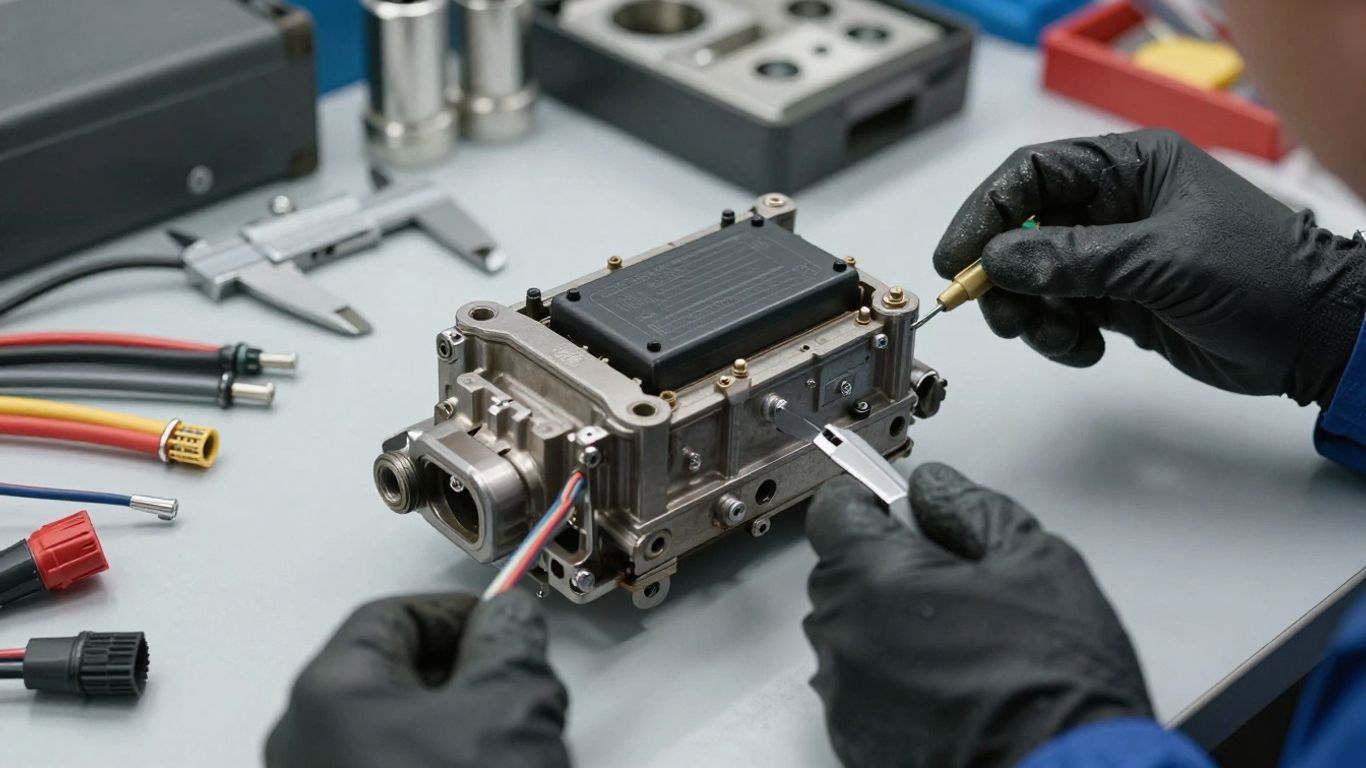
“Tested,” “inspected,” and “guaranteed” are useful terms only when the seller explains them. Testing may involve operation on the donor vehicle, bench testing, pressure testing, electrical checks, or a visual review, depending on the component. Ask which method applies and whether the result is recorded in the inspection notes.
A guarantee or warranty should be read alongside the installation requirements. Some policies require professional installation, matching diagnostic codes, fluid changes, or proof that related components were checked. Keep the listing and written answers so the condition promised at sale can be compared with what arrives.
Asking about mileage, wear, corrosion, and storage conditions
Mileage is particularly relevant for engines, transmissions, axles, steering components, and suspension parts, although it is not a complete predictor of condition. Ask whether the donor vehicle was running, damaged by collision, exposed to flooding, or stored outdoors. Corrosion around connectors and mounting points can matter even when the main assembly appears intact.
Storage duration also deserves attention. Rubber seals, batteries, dampers, and exposed electrical contacts may deteriorate while sitting. Request an honest description of leaks, dents, cracks, missing fasteners, and surface rust, then decide whether the condition is acceptable for the repair.
Reviewing photos, inspection notes, and included hardware
Photos should show the actual component rather than a catalog illustration. Look for labels, connectors, mounting surfaces, damage, and included accessories. Inspection notes should answer practical questions such as whether a motor turns, a panel has significant dents, or a module was removed from a functioning vehicle.
Ask what arrives in the box. Sensors, brackets, keys, wiring pigtails, covers, and fasteners may be essential or expensive to source separately. If an item is not included, record that before ordering and price the missing hardware as part of the repair.
Identifying parts that should not be purchased used
Some parts carry too much safety or reliability risk for an uncertain history. Tires with unknown age, damaged restraint components, severely corroded structural parts, and worn brake friction materials deserve particular caution. A used item may also be unsuitable when failure could cause injury or destroy another expensive component.
For these parts, choose a new or professionally rebuilt option when the history cannot be verified. If you are unsure, ask a qualified technician to assess the component and the consequences of failure. Saving money is not a sound trade when the part’s condition cannot be established.
Calculating the true cost of express delivery
The quoted part price is only one line in the repair budget. Express delivery may be worthwhile for a vehicle that supports work, but it can be wasteful when the installer has not confirmed fitment or when another required component is still missing. Add every charge before comparing sellers. A clear total makes the decision calmer and reduces surprises at checkout.
Comparing part price with shipping and handling fees
Request an itemized quote showing the part, handling, shipping service, taxes, and any surcharge for oversized packaging. Two sellers can list similar prices while differing substantially in freight or preparation fees. For heavy components, ask whether the delivery is parcel service or freight and whether the destination requires special access.
The cheapest part is not necessarily the cheapest delivered option. Compare the final total, the expected dispatch date, the warranty, and the return process together. A modest difference in shipping may be worthwhile if it comes with better documentation and a lower risk of reordering.
Weighing delivery speed against replacement urgency
Choose the delivery speed based on the actual repair schedule. If the vehicle is already in a shop, confirm when the technician can begin and whether the bay is available if the shipment slips. If the vehicle is usable, standard delivery may preserve cash without changing the repair outcome.
Urgency can also justify paying for better tracking or a signature service rather than simply selecting the fastest transit tier. Make sure someone can receive the package, particularly when it contains a large or valuable component. A missed delivery can erase the practical benefit of express service.
Accounting for core charges, taxes, and installation labor
Some replacement assemblies carry a core charge that is refundable only when the old component is returned in an acceptable condition. Ask whether the charge is collected at checkout, how the core must be packaged, and who pays return freight. Include local taxes and disposal costs in the same calculation.
Labor can exceed the part price when access is difficult, programming is required, or related seals and fluids must be replaced. Ask the installer for a realistic labor range before ordering. That estimate may change which version of the component provides the best overall value.
Avoiding unexpected costs from incorrect or damaged shipments
Document the package and part as soon as they arrive. Photograph crushed corners, torn wrapping, fluid leakage, broken connectors, and visible dents before discarding anything. Notify the seller promptly and follow the carrier-claim instructions rather than attempting installation on a damaged component.
A correct part that arrives late can be inconvenient; an incorrect part can add return freight, another handling period, and a second labor appointment. Confirming fitment before purchase and preserving the shipping evidence are simple ways to limit those costs.
Managing installation, warranties, and returns
Ordering is not the end of the process. The vehicle, work area, tools, and technician should be ready before the delivery arrives, especially when express shipping was chosen to minimize downtime. Installation records also protect a warranty claim if the part fails. Keep the order confirmation, photos, tracking details, and invoices together.
Preparing the vehicle and tools before the part arrives
Review the service procedure before delivery and identify tools, fluids, gaskets, seals, fasteners, and lifting equipment that may be needed. Some parts require a scan tool, torque specifications, special alignment equipment, or a second person for safe handling. Buying those supplies in advance prevents the new component from sitting unused.
Confirm that the vehicle is stable and safely supported before removing the old part. If the replacement is a body panel or interior assembly, protect surrounding paint and trim. Preparation is especially valuable with expedited orders because there may be little time to solve a missing-tool problem.
Checking the shipment immediately after delivery
Inspect the shipping carton before opening it, then compare the contents with the order and photographs. Check labels, part numbers, connectors, mounting points, included hardware, and visible damage. Do not throw away packaging until fitment and operation have been confirmed.
If something is wrong, contact the seller before installation and provide clear photos. Chuck and Eddies states that it offers quick returns and order-status access, but the applicable process and timing should be confirmed for the specific purchase. Prompt reporting gives the seller a better chance to correct the issue without delaying the repair further.
Following installation requirements for electronic components
Electronic components may need programming, coding, relearning, or calibration after installation. Ask whether the replacement must be matched to the vehicle, reset with a scan tool, or paired with another module. Installing a physically compatible unit without completing those steps can create warning lights or nonfunctional systems.
Follow the service information for battery disconnection, static protection, connector handling, and diagnostic checks. Record fault codes before removing the original module when possible. A technician can then distinguish a pre-existing problem from an issue introduced during installation.
Understanding return windows, warranty coverage, and restocking fees
Read the return policy before opening or modifying the part. Confirm the number of days allowed, whether the item must remain unused, who pays return shipping, and whether restocking or core fees apply. Ask how the policy handles an incorrect listing, shipping damage, and a part that fails during the warranty period.
Some warranties cover the component but not diagnostic time, towing, fluid, programming, or installation labor. Those exclusions affect the real risk of the purchase. Keep receipts and installation records, and never send back a core or replacement without following the seller’s authorization and packaging instructions.
Conclusion
Express shipping Chrysler used parts can be a practical way to keep a repair moving, but the best result comes from disciplined checking rather than speed alone. Verify the VIN and part number, compare the complete delivered cost, ask direct questions about condition, and inspect the shipment before installation. With those steps in place, a used OEM component has a better chance of arriving on time, fitting correctly, and solving the original problem without creating another one.