Key Takeaways
Finding the right Chrysler part is mostly a matter of checking details before you pay. Take time to confirm fitment, compare the complete cost, and understand the seller’s terms.
- Use your model, year, variant, and VIN to narrow down the correct part.
- Compare genuine, OEM, aftermarket, and used options by fit, condition, warranty, and price.
- Check the listing carefully and ask the supplier to confirm compatibility.
- Compare the delivered cost and confirm exactly what comes with the part.
- Review shipping, return, and installation requirements before ordering.
Identify the correct part for your Chrysler
A Chrysler model name alone may not tell you which replacement component will fit. Vehicles can differ by year, variant, engine, and other specifications, even when they share a name. Start with your vehicle details, then confirm the part itself against a reliable listing or with the supplier.
Find your model, year, and variant
Write down the model, build year, and variant before you start searching. If you know the engine size or body style, include that too; these details can help distinguish versions that otherwise look similar in a catalog. A listing’s fitment notes are a useful starting point, but read them against your vehicle rather than assuming every version is covered.
Use the VIN to confirm compatibility
The vehicle identification number can help a supplier check the exact vehicle specification. Share it when asking for fitment advice, especially when the listing uses broad model-year ranges or your car has had a previous repair. A Chrysler fitment guide also outlines the value of checking the model, year, variant, VIN, and part number before buying.
Match part numbers and specifications
Compare the number on your existing part, where available, with the number in the listing or a supplier’s records. Also check details such as connector type, dimensions, side of vehicle, and any stated engine or trim requirements. Part-number confirmation is particularly useful when several components look alike but are not interchangeable.
Choose between genuine, OEM, and aftermarket parts
The right choice depends on the part, the condition of your vehicle, and your budget. Genuine, OEM, aftermarket, and used parts are different categories, and labels can vary between sellers, so check what a listing means rather than relying on a badge alone. If you are browsing a Chrysler parts catalogue, use its compatible-vehicle details as a prompt to verify the fit, not as a substitute for checking your own vehicle information.
Understand what each parts category means
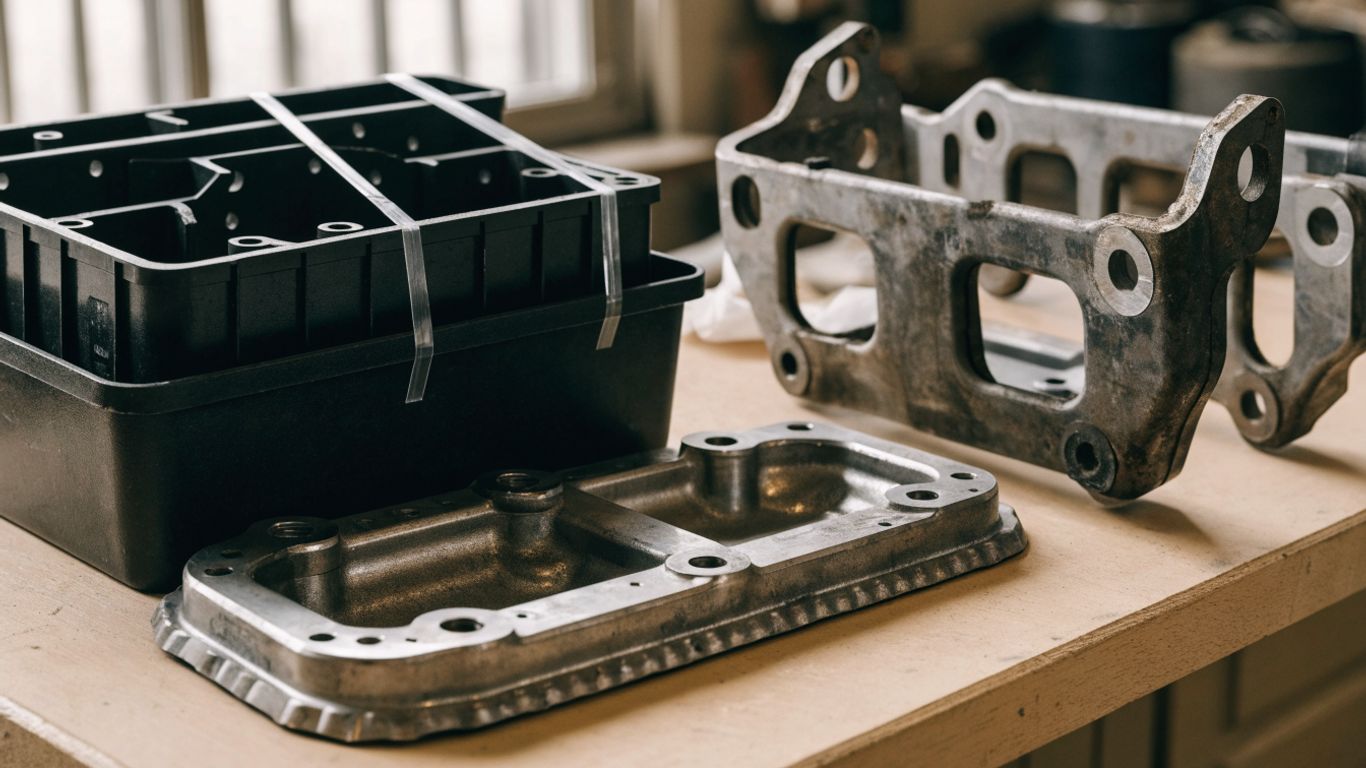
Genuine parts are sold as the vehicle maker’s parts; OEM generally refers to parts made by an original equipment manufacturer, while aftermarket parts are made by other suppliers. Used parts have been removed from another vehicle, so condition and testing details matter as well as fitment. Ask the seller to clarify the category if the product description is vague.
Compare quality, warranty, and price
A category label does not tell you everything about the specific part. For a used component, look for a clear description of its condition and any inspection or testing information; for a new replacement, compare the stated warranty and fitment details. This simple comparison can help you weigh the options without treating the most expensive choice as automatically the best one.
| Part type | What to check | Useful question |
|---|---|---|
| Genuine | Vehicle fitment and warranty | Is this listed for my exact variant? |
| OEM | Manufacturer and part number | Does the number match my existing part? |
| Aftermarket | Specifications and warranty | Which vehicle versions are covered? |
| Used | Condition and testing information | What checks have been completed? |
Use the answers to compare like with like: a lower price may not include the same warranty or condition details. If a seller cannot explain the category or provide basic specifications, pause before ordering.
Know when genuine parts are worth the cost
A genuine replacement may be worth considering when you want the part sold under the vehicle maker’s name or need to match an existing component closely. For an older vehicle or a repair with a tight budget, a suitable used or aftermarket option may also be worth comparing. Let fitment, condition, availability, and total cost guide the decision.
Find a reliable Australian online parts supplier
An online listing is only part of the buying process; clear advice and practical business details matter too. Look for suppliers that explain how to identify a part, provide a way to ask questions, and state how shipping and returns work. For example, Just Chrysler describes an online range of genuine and aftermarket parts and offers fitment advice, which may help you know what to ask when checking a listing.
Check specialist knowledge and business details
A supplier who regularly handles Chrysler parts may be able to discuss model-specific details or help source a part that is not immediately listed. Check that the business provides clear contact information and explains how to request help. As a separate point of reference, an Offshore Blog discusses business structures and practical considerations; it is not a guide to automotive fitment, so assess parts suppliers on their own information and service.
Review product listings and fitment information
A useful listing should identify the part, state its condition or category, and give enough specifications to help you assess compatibility. Look for part numbers, fitment ranges, and any notes about what is included. If key details are missing, ask before buying rather than treating a broad model label as confirmation.
Assess customer feedback and support options
Read feedback for clues about communication, delivery, and how the seller handles problems, while remembering that reviews are individual accounts. The Google reviews guide discusses review trust and local visibility in a different context; for a parts purchase, focus on whether feedback offers specific, relevant information. It should complement, not replace, a direct fitment check.
Compare prices and check what is included
An advertised price may not reflect the full cost of getting the part to your door or ready for installation. Compare equivalent parts and account for delivery, any required hardware, and the terms attached to the sale. A photograph can help you understand what is shown, but the written description should settle what you will actually receive.

Look beyond the advertised part price
Check whether shipping is included and whether the delivery estimate applies to your location. If you are budgeting for a larger repair, consider the total ownership cost rather than the price of one component alone; the 10-year car-buying rule offers a broader perspective on long-term vehicle costs, though it does not determine which part fits. Compare the same part category and condition across quotes so the numbers are meaningful.
Confirm whether accessories or hardware are included
Product photos do not always show every item included in a sale. Ask whether brackets, fasteners, sensors, trim, or other related pieces come with the part, particularly if you need them to complete the repair. Before placing an order, it can help to confirm these details in writing:
- The exact part number or identifying description.
- The condition and any inspection or testing information.
- Whether related hardware or accessories are included.
- The delivered price and expected dispatch or delivery timing.
That short check makes it easier to compare quotes and reduces the chance of discovering that a needed item must be sourced separately. If a detail affects fit or installation, get the answer before checkout.
Compare warranty terms and payment options
Check what the warranty covers, how long it lasts, and what steps apply if the part is unsuitable or faulty. Read payment terms as well as the headline price, and keep the listing and any written fitment advice with your order records. A dental insurance guide discusses how exclusions and limits can affect a policy; the subject is different, but the general habit of reading terms rather than relying on a headline figure is useful here too.
Plan for delivery, returns, and installation
A suitable part still needs to arrive in good condition and be fitted correctly. Before ordering, check how the supplier ships to your area, what happens if the part is not suitable, and whether the repair is within your skills. For a workshop arranging multiple jobs, Dynamics 365 covers field-service scheduling and work orders, a separate issue from choosing or buying the Chrysler part itself.
Check shipping costs and delivery estimates
Ask whether the part is in stock and how the quoted delivery window is calculated. Large or heavy items may need different handling from smaller components, so confirm the shipping charge and delivery arrangements for your address. Just Chrysler describes nationwide shipping, but you should still confirm the timing and cost for the specific item and destination.
Review return rules for incorrect or unsuitable parts
Read the return policy before paying, including any time limits, condition requirements, and steps for arranging a return. If the part was selected using supplier advice, save the conversation and your vehicle details in case you need to refer back to them. Do not assume a part can be returned simply because it does not fit; the seller’s stated rules apply.
Decide whether professional installation is needed
Some repairs require specialist tools, diagnostic steps, or safety procedures. If you are unsure, ask a qualified mechanic whether the part and the job are suitable for a DIY repair before buying. Correct installation matters as much as choosing the correct component, especially when the repair affects vehicle safety or complex systems.
Avoid common online parts-buying mistakes
Most avoidable problems start with an assumption: that a model name proves fitment, that a photo shows everything included, or that a low price covers the complete job. Slow down long enough to compare the listing with your vehicle details and the supplier’s terms. When something is unclear, a short question can be cheaper than ordering the wrong part.
Don’t rely on model name alone
The same Chrysler model name can cover different years, variants, and specifications. A part that fits one version may not fit another, so treat the model name as the first search step rather than the final check. Include build details and compare the listing’s fitment notes before deciding.
Verify compatibility before placing an order
Check the part number where possible, then confirm that it matches the relevant vehicle specifications. If the listing provides a broad fitment range, ask the supplier to check your VIN rather than guessing. Just Chrysler says its team can help customers identify the correct part for a specific model and year; clear vehicle details make that conversation more useful.
Ask for clarification when product details are incomplete
Do not fill gaps in a listing with assumptions. Ask about condition, included items, fitment, warranty, and delivery if any of those details are missing. A helpful supplier should be able to explain what is known and what still needs checking; if an answer remains uncertain, wait until you can verify it.
Conclusion
Buying Chrysler spare parts online in Australia is easier when you check fitment before comparing prices, read the listing closely, and confirm delivery and return terms before checkout. Keep your vehicle details and part numbers handy, and ask for help whenever a description leaves room for doubt. A careful match is more useful than a quick bargain that does not fit.
Frequently Asked Questions
What details do I need to find a Chrysler part?
Start with the model, year, and variant, and include the VIN if you can. Engine or body details and the existing part number can help narrow down compatible options.
Does a part fit every vehicle with the same Chrysler model name?
Not necessarily. Specifications can vary by year and variant, so check the listing against your vehicle details and confirm with the supplier when needed.
What is the difference between genuine, OEM, and aftermarket parts?
Genuine parts are sold as the vehicle maker’s parts, OEM generally refers to parts made by an original equipment manufacturer, and aftermarket parts are made by other suppliers. Check the seller’s description to confirm exactly what is being offered.
Are used Chrysler parts worth considering?
They may be a cost-effective option, depending on the part and its condition. Ask how it has been inspected or tested and confirm fitment, warranty, and return terms before buying.
How can I check whether a part number is correct?
Compare the number on your existing component with the listing or ask the supplier to verify it against your vehicle details. If the numbers differ, do not assume the parts are interchangeable.
What should I ask before ordering a part online?
Confirm compatibility, condition, included hardware, delivered price, warranty, shipping estimate, and return rules. Keep the answers with your order details.
Should I install a replacement part myself?
That depends on the job, your tools, and your experience. If the repair involves safety-critical systems or you are uncertain about the procedure, consult a qualified mechanic.