Key Takeaways
When an urgent Chrysler part needed today, speed matters, but correct fit matters more. A few details gathered before you call can prevent a wasted trip and an expensive return.
- Have the VIN, model, year, engine, and part description ready.
- Call nearby dealer parts departments, auto parts stores, and salvage yards.
- Confirm the exact part number, condition, and pickup time before paying.
- Ask about returns, warranty coverage, core charges, and installation.
- Inspect and test the part before closing out the repair.
Identify the Chrysler part you need
The quickest purchase starts with a precise description of what failed. “I need a sensor” or “I need a mirror” may not be enough because one vehicle can use several versions of each component. Gather the vehicle details and, if possible, photograph the old part before contacting a seller.
Use the VIN to confirm compatibility
The vehicle identification number is usually the best starting point for a fitment check. Give the full VIN to the parts counter rather than relying only on a license plate lookup or a memory of the trim level. The seller can compare the vehicle record with the catalog listing and tell you whether the part is tied to a particular production range.
VIN information is especially useful when a model changed equipment during the same year. It can also help separate parts that look alike but use different wiring, mounting points, or calibration.
Match the part to the model, year, and engine
Write down the exact model, model year, engine size, drivetrain, and trim before searching. A Chrysler sedan, crossover, minivan, or SUV may have several engine and equipment combinations, and the same nameplate can use different brakes, cooling parts, sensors, or body components.
If the vehicle has been modified, mention that too. A replacement listed for the base configuration may not fit a vehicle with a different engine, towing package, suspension, lighting system, or emissions equipment.
Check whether you need an OEM or aftermarket replacement
Ask what kind of replacement is being quoted and what the seller means by that description. Genuine Mopar OEM parts are described in the available source material as being made to factory specifications for Chrysler, Dodge, Jeep, Ram, and Fiat vehicles. An aftermarket part may cost less or be easier to locate, but its part number, coverage, and return terms should be checked carefully rather than assumed.
For a time-sensitive repair, availability may decide the choice. Still, compare the exact application, warranty, and condition before accepting a substitute simply because it can arrive sooner.
Distinguish between a complete assembly and an individual component
Many listings use similar words for very different packages. A complete assembly might include a motor, housing, sensor, wiring, or mounting hardware, while an individual component may contain only the failed piece. Ask the seller to state exactly what is inside the box.
This distinction affects both price and installation time. If a shop expects a complete assembly but you order a bare component, the repair can stall even though the item technically belongs to the vehicle.
Find nearby sources with same-day availability
Once the part is identified, search in widening circles instead of waiting on a single online listing. Start with sources close enough for pickup, then ask whether another location can transfer the item. Same-day availability is not confirmed until someone verifies the physical stock and places the item on hold.

Contact Chrysler, Dodge, Jeep, and Ram parts departments
Call parts departments at nearby dealerships and give the VIN and part number together. A dealer parts specialist may be able to check current stock, place an item on reserve, or explain when an order can be collected. Ask whether the quoted item is physically at that location or merely available through a catalog.
A dealership that sells genuine Mopar OEM parts may also be able to identify the factory replacement by VIN. That does not guarantee same-day stock, so ask for a realistic pickup time before arranging transportation.
Search local auto parts stores and salvage yards
Independent auto parts stores can be useful for common maintenance and repair components, while salvage yards may have body panels, interior pieces, modules, or assemblies that are no longer readily available nearby. Describe the part by function and provide the vehicle details, but do not treat a verbal match as final confirmation.
For used parts, ask for the donor vehicle’s year, engine, trim, mileage if known, and damage history. A photograph of the label or connector can save time when the same component appears in several revisions.
Ask about in-stock, reserved, and transfer options
“In stock” can mean several things. It may refer to a sellable item on a shelf, a unit already reserved for someone else, or inventory at another branch. Ask the employee to clarify which situation applies and whether the item can be held under your name.
A short call can establish the practical choices:
Treat availability as confirmed only when the seller identifies the location, condition, and time it will be ready.
That standard keeps a promising search result from turning into an empty counter visit. It also gives you a clear basis for comparing a local pickup with a transfer or shipment.
Confirm pickup deadlines before traveling
Ask when the counter closes, how long a reservation lasts, and what identification or payment method is required. Some locations may have separate warehouse and retail hours, especially on weekends or holidays. Confirm the address if the seller has more than one branch nearby.
Repeat the part number and your name before ending the call. If the drive is long, call again shortly before leaving to make sure the hold is still active and the item has not been mislocated.
Verify the part before buying
Urgent purchases create pressure to accept the first plausible listing. Take a few minutes to compare the physical part and the catalog information, especially when the seller is offering a used, rebuilt, or substitute item. That small pause is often cheaper than returning an incorrect component.
Compare the part number across listings
Look for the manufacturer or catalog number on the original part, its packaging, and the seller’s listing. Numbers can contain letters, suffixes, or revision marks that are easy to overlook. Record the complete sequence and ask whether an updated number supersedes it.
Do not assume that two listings are interchangeable because their titles use the same plain-language name. The complete part number matters more than a broad description such as “front sensor” or “left actuator.”
Check photos, dimensions, and connector styles
Photos can reveal differences that a short title hides. Compare the mounting holes, shaft or hose positions, connector shape, wire count, tabs, seals, and overall proportions with the part you removed. If measurements are available, check them against the vehicle and the space where the component sits.
For a remote purchase, request close photographs of labels and connectors. A seller who cannot show the relevant details may still have a usable part, but the uncertainty should affect your decision and return plan.
Confirm new, used, rebuilt, or remanufactured condition
Condition changes both risk and price. A new part should be described as new, while a used part should come with whatever testing or inspection information the seller can provide. Rebuilt and remanufactured items may involve different processes and warranties, so ask which term applies and who stands behind it.
Also ask whether the package includes gaskets, seals, brackets, sensors, or hardware. A low price can become less attractive when essential installation pieces are missing.
Watch for compatibility issues with trim packages
Trim packages can affect lighting, safety systems, seats, infotainment, suspension, wheels, and body parts. Two vehicles with the same model and year may therefore require different components. Confirm options such as adaptive equipment, parking sensors, a premium audio system, four-wheel drive, or a towing package when relevant.
If the part is electronic, ask whether programming, coding, calibration, or relearning may be required after installation. The seller may not perform that work, but knowing about it before purchase helps you schedule the repair properly.
Choose the fastest ordering and delivery option
The fastest option is not always the one with the shortest advertised shipping estimate. A nearby item that can be reserved may beat an online order, while a transfer can work when no local branch has the part. Compare the complete timeline from payment to the moment the component is actually ready to install.
Request same-day pickup or local delivery
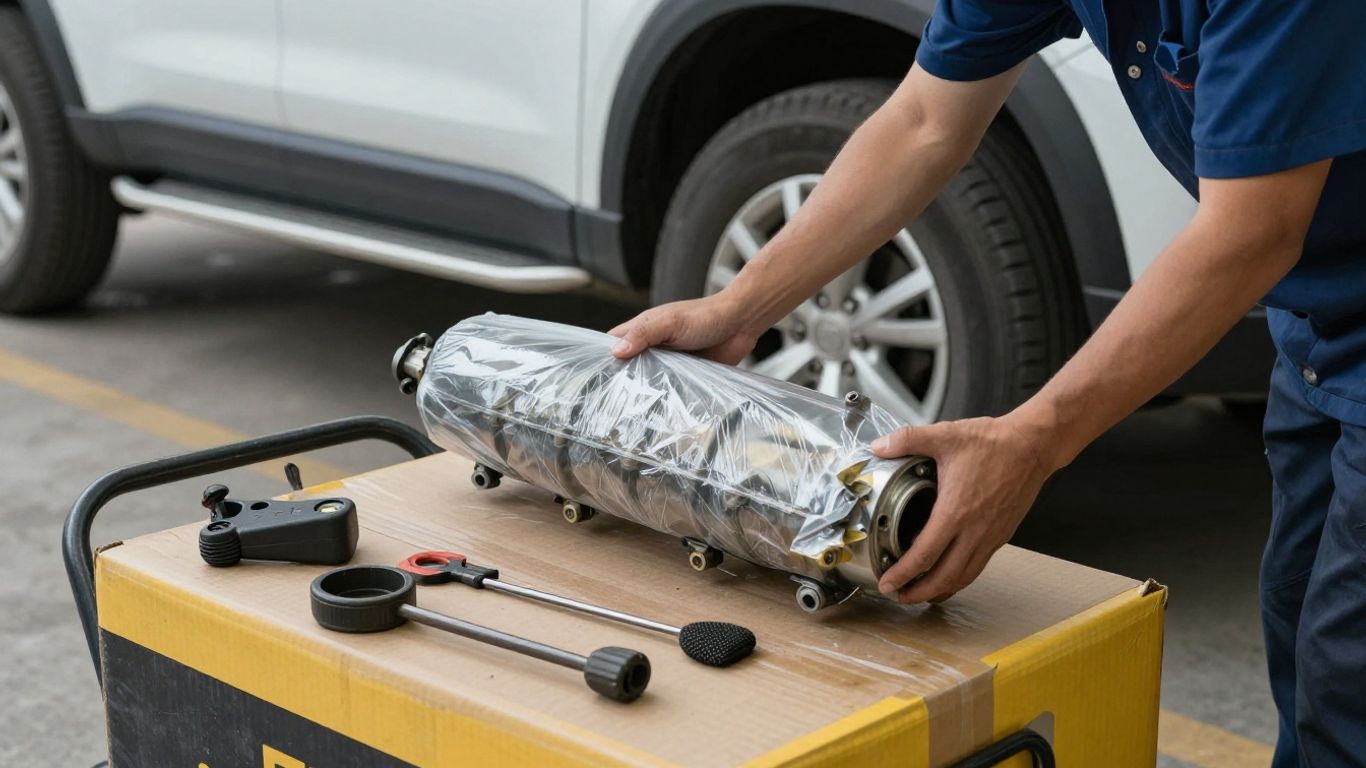
When a source has confirmed stock, ask whether it offers same-day pickup or local delivery. Get the expected ready time in writing if possible, along with the order number and pickup name. For a heavy or fragile assembly, local delivery may reduce the risk of damage during a rushed trip.
Before paying, confirm that the item being held is the same number and condition you discussed. If another person will collect it, make sure the seller knows who is authorized.
Use expedited shipping when local inventory is unavailable
Expedited shipping can make sense when the part is unavailable nearby, but check the cutoff time and the carrier service level. “Ships today” does not necessarily mean “arrives today,” and a warehouse handling delay can erase the benefit of paying for faster transport.
Ask whether the shipping estimate includes weekends, whether a signature is required, and how damage claims are handled. For a vehicle that must be repaired by a shop, coordinate the delivery window with the appointment rather than guessing.
Coordinate dealer-to-dealer or store-to-store transfers
A transfer may be faster than ordering from a central warehouse if another branch already has the correct part. Ask who is responsible for initiating it, when the transfer leaves, and when the receiving location expects it. Request a transfer reference or other confirmation so the order can be tracked.
Do not make a long trip until the receiving store confirms arrival. Inventory systems can lag, and a part listed at one location may already be committed to another customer.
Ask whether installation is available after delivery
If the repair is beyond your tools or experience, ask the seller or a nearby service department whether installation can be scheduled once the part arrives. This is particularly helpful for components requiring lifting equipment, fluid recovery, electrical testing, or calibration.
Give the installer the exact part number and condition before the appointment. A shop may need to inspect the vehicle first, and some repairs require related hardware or additional parts that are not included in the main package.
Avoid costly mistakes during an urgent purchase
A rushed purchase often fails because one small assumption goes unchallenged. The car may look like the listing, the part may have a familiar name, and the price may seem attractive, yet the fitment or terms can still be wrong. Keep the urgency focused on making a sound decision quickly, not on skipping basic checks.
Do not rely on the vehicle’s appearance alone
Exterior appearance is a poor fitment test. A replacement mirror, lamp, grille, wheel, or module can look identical while differing in connectors, sensors, mounting points, or programming requirements. Use the VIN and part number as your primary evidence.
When buying a used component, inspect the actual item rather than relying on a stock photograph. Ask for images from the side that contains the label, connector, or mounting hardware.
Check return policies for electrical and special-order parts
Electrical components may have stricter return rules because installation can affect testing and resale. Special-order items may be nonreturnable or subject to a restocking fee. Read the policy before payment and ask how the seller handles an item that does not match the VIN.
Keep the packaging, labels, and receipt until the repair is complete. If the part is wrong, those details can make a return far easier.
Verify warranty coverage and core charges
Ask how long the warranty lasts, what it covers, and whether labor is excluded. Rebuilt or remanufactured parts may require a core charge that is refunded only after the old component is returned and accepted. Confirm the deadline and condition requirements for that return.
A warranty is useful only when you understand the process. Save the seller’s instructions and note whether the claim must be handled through the original location.
Beware of counterfeit or incorrectly labeled components
Unusually low prices, blurry labels, inconsistent packaging, and vague seller information deserve caution. Compare the markings with trusted catalog information and ask where the item came from. A mislabeled part can waste more time than a slightly more expensive, traceable replacement.
For a critical or safety-related component, choose a source that can provide a clear part number, condition, and return path. Speed has value, but an uncertain component can create a second breakdown or an unsafe repair.
Prepare for installation after the part arrives
Getting the right part to the driveway or shop is only part of the job. Before removing anything, confirm that the delivered component matches the order and that the repair plan accounts for tools, fluids, fasteners, and possible programming. A careful inspection protects both your time and the warranty.
Decide whether professional installation is necessary
Some repairs are reasonable for an experienced owner with the correct tools and service information. Others involve airbags, fuel systems, high voltage, suspension loads, refrigerant, or advanced electronics and are better handled by a qualified technician. Consider the risk of damage and the consequences of an installation error, not just the labor charge.
If professional work is needed, ask for an estimate based on the exact part and vehicle. Mention whether the part is new, used, rebuilt, or remanufactured so the shop can plan its inspection and testing.
Gather tools, instructions, and related replacement hardware
Review the installation instructions before starting and identify any one-time-use fasteners, seals, clips, fluids, or gaskets. Check whether the job requires a torque specification, scan tool, alignment, bleeding procedure, or post-installation calibration. Having these items ready prevents a half-finished repair.
For a Mopar OEM part, retain the packaging and catalog information until fitment and operation have been confirmed. Those records can help if the installer identifies a mismatch or a warranty issue.
Inspect the new part before removing the old one
Compare the new component with the old one while the vehicle is still intact. Check labels, connectors, brackets, mounting holes, seals, and included hardware. If anything differs, stop and contact the seller before disassembly makes the situation harder to explain.
Look for shipping damage as well. Photograph dents, cracked housings, torn seals, or damaged pins immediately, and keep the box until the seller tells you how to proceed.
Test the repair and keep the purchase documentation
After installation, test the function that led to the purchase and check for warning lights, leaks, unusual noises, loose fasteners, or error codes. Follow any required relearn or calibration procedure before returning the vehicle to normal use. If a professional completed the work, ask what was tested and whether a follow-up inspection is recommended.
Keep the receipt, order confirmation, part number, warranty terms, and installation invoice together. If an urgent Chrysler part needed today solved the immediate problem, those records will still matter if the vehicle needs support later.
Conclusion
Finding a part quickly is much easier when the search begins with the VIN and ends with a physical inspection. Confirm the number, condition, source, pickup or delivery time, and return terms before committing, then match the installation plan to the repair’s difficulty. That process turns a stressful same-day purchase into a controlled, practical repair decision.